Search
BlogRead the Latest News
Texas Authors Institute of History
A Unique Museum that saves history, inspires the future, depth and gives to the present..

- Details
- Written by Super User
RATCHFORD, FANNIE ELIZABETH (1887–1974). Fannie Elizabeth Ratchford, librarian and scholar, was born on June 5, 1887, in Paint Rock, Texas, the seventh child and youngest daughter of James Wylie and Malinda (Rose) Ratchford. Her early education took place at home and in the local two-teacher school. Instead of leaving school at the usual age of fourteen or fifteen, she continued her studies and qualified through examination for the highest level of teacher certification. She taught school in Brownwood, Fort Worth, and various West Texas towns while attending college intermittently. She entered the University of Texas in 1905 and completed one year of study, then attended Daniel Baker College in Brownwood (1911–12) and the University of Kansas (summer 1914) before returning to the University of Texas for two summer sessions (1918 and 1919). She graduated in 1919 with a B.A. from the university and did subsequent work by correspondence at the University of Kansas. Professor Reginald H. Griffith, a scholar of eighteenth-century literature at the University of Texas, encouraged her to work toward a master's degree (awarded in 1921) and to accept the position of assistant in the newly acquired Wrenn Library.
From 1919 until she retired in 1957, Miss Ratchford was associated with the rare book collections; in various positions-Wrenn Library assistant, Wrenn librarian, rare book librarian, curator of rare books and lecturer in bibliography, and curator of rare books and director of research in rare book bibliography-she nurtured and extended the collections, overseeing the addition of the Aitken and Stark libraries (1921 and 1925 respectively), as well as the acquisition of numerous gifts and purchases. During her tenure as librarian-a term she considered inappropriate because of her lack of formal training in library science-Miss Ratchford insisted on special cataloging and treatment to preserve the materials under her care. She also promoted recognition of the collections in the scholarly community through exhibitions and publications.
Ratchford's scholarly interests had their genesis in the Wrenn Library. Intrigued by a tiny Charlotte Brontë manuscript written in a microscopic hand, she steadfastly pursued and located additional miniature manuscripts by Charlotte and Branwell Brontë in an effort to determine the significance of these early pieces. The resulting works, Legends of Angria (1933), written in collaboration with William Clyde DeVane, The Brontës' Web of Childhood (1941), and Ratchford's edition of Emily Brontë's Gondal's Queen (1955), were widely recognized as lasting contributions to Brontë scholarship. In another blaze of literary detection, Ratchford, assisted by the Wise-Wrenn letters in the collections, investigated further the role of Thomas J. Wise in producing forgeries of nineteenth-century pamphlets-an investigation that implicated Sir Harry Buxton Forman as Wise's accomplice. Called a "formidable controversialist in print" by chancellor emeritus Harry Huntt Ransom, Ratchford did not hesitate to challenge the conclusions of respected scholars John Carter and Graham Pollard in her studies Letters of Thomas J. Wise to John Henry Wrenn: A Further Inquiry into the Guilt of Certain Nineteenth-Century Forgers (1944) and Between the Lines: Letters and Memoranda Interchanged by H. Buxton Forman and Thomas J. Wise (1945). In addition to the works mentioned, she wrote or edited numerous books and articles in her lifetime, ranging from her first publication, Some Reminiscences of Persons and Incidents of the Civil War (1909), as told to her by her father, to works on genealogy, folklore, local history and English literature. In addition, as a member of the first Book Club of Texas she did pioneering work in promoting fine printing in the state. Her edition of A. W. Terrell's From Texas to Mexico and the Court of Maximilian in 1865 was named one of the "fifty books of the year" by the American Institute of Graphic Arts.
Ratchford's endeavors were supported in part by Guggenheim fellowships for 1929–30, 1939–40, and 1957–58, and by Laura Spelman Rockefeller research fellowships for 1934–36. Other honors conferred on her included the Texas Ex-Students' Association Centennial Lecture Award (1936) for a series of lectures she delivered in Texas colleges and an honorary LL.D. from Western College for Women in Oxford, Ohio (1954). After her retirement in 1957, Fannie Ratchford assisted in editing the Oxford edition of the complete works of the Brontës. She was a lifetime member of the Presbyterian Church. She died in Austin on February 9, 1974.
Austin American-Statesman, February 10, 1974. Wilma Ratchford Craig, Ratchfords . . . I Reckon (Baltimore: Gateway, 1971). Harry Huntt Ransom, "Fannie Ratchford," Library Chronicle of the University of Texas at Austin, New Series 9 (1977). James Wylie Ratchford, Some Reminiscences of Persons and Incidents of the Civil War (1909; facsimile reprod., Austin: Shoal Creek, 1971). Clara Marie Loewen Sitter, The History and Development of Rare Books Collections of the University of Texas Based on the Recollections of Miss Fannie Ratchford (M.L.S. thesis, University of Texas, 1966). Autrey Nell Wiley, "Our Frontispiece: Fannie Elizabeth Ratchford," Bulletin of Bibliography 20 (May-August 1950).
Citation
The following, adapted from the Chicago Manual of Style, 15th edition, is the preferred citation for this article.
William E. Bard, "ADAMS, WALTER R.," Handbook of Texas Online (http://www.tshaonline.org/handbook/online/articles/fad08), accessed March 19, 2015. Uploaded on June 9, 2010. Published by the Texas State Historical Association.
- Details
- Written by Super User
Member
Texas
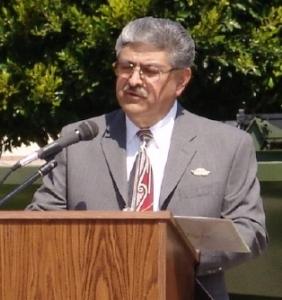
Raúl Herrera is a decorated Vietnam War Navy combat boat veteran. As a freelance writer, his articles have appeared in Nuestras Vidas magazine, Vietnam magazine, Sea Classics magazine, and most recently the New York Times published an article commemorating the 50th Anniversary of his Swift Boat crew’s capture of a North Vietnamese resupply trawler.
The book, titled SKUNK ALPHA, is currently in the hands of his agent. The story recounts the adventure of an impressionable twenty-year-old Mexican American sailor from San Antonio, Texas. It chronicles this young man’s journey that takes him from the safety of high school life and young teenage love to perilous combat action on the high seas at the height of communist aggression during the Vietnam War. Along the way of his literary journey, his work in progress placed as one of the top ten national finalists in the John T. Lupton New Voices in Literature competition.
Two book interviews aired on the CBS Houston affiliate station KHOU-TV and were followed by five Sunday morning radio talk shows. He served on the Board of the Swift Boat Sailors Association from 2006 to 2013, the last six years as president. Oral history recordings of the author are available on the Texas Capitol Vietnam Veterans Monument website in the Veteran’s Stories section, as well as in the United States Navy Memorial website in Washington, D.C. 'Times New Roman'; font-size: medium;">Mr. Herrera retired from Dannenbaum Engineering in 2010. He was born and raised in San Antonio, Texas. He is married and currently calls Richmond, Texas, home..
- Details
- Written by Super User
Citation
The following, adapted from the Chicago Manual of Style, 15th edition, is the preferred citation for this article.
William E. Bard, "ADAMS, WALTER R.," Handbook of Texas Online (http://www.tshaonline.org/handbook/online/articles/fad08), accessed March 19, 2015. Uploaded on June 9, 2010. Published by the Texas State Historical Association.
- Details
- Written by Super User

Member
Texas
Having relocated from the U.K, I am now living in Texas where I found the inspiration for my children’s book. Previously I worked as an educator and a therapist, where I realised that if children had coping mechanisms to deal with trauma, they would be better adjusted as adults. Whilst healing childhood trauma in adults was very rewarding, I wanted to find a way to reach the early source of the problem. Hence, I began writing. Little Mis-Fit is a celebration of our inner child. I want to use creativity to create a positive space for discussion and exploration.