Search
BlogRead the Latest News
Texas Authors Institute of History
A Unique Museum that saves history, inspires the future, depth and gives to the present..

- Details
- Written by Super User
BEDICHEK, ROY (1878–1959). Roy Bedichek, writer and folklorist, was born in Cass County, Illinois, on June 27, 1878, the son of James Madison and Lucretia Ellen (Craven) Bedichek. In 1884 the family moved to Falls County, Texas. Bedichek attended rural schools and Bedichek Academy, established at Eddy by his father. In February 1898 he entered the University of Texas. Soon he began to work in the office of the registrar,John A. Lomax, who became his friend for life. In 1903 he received a B.S. degree and in 1925 an M.A. He was a reporter for the Fort Worth Record (1903–04) and taught in high schools in Houston (1904–05) and San Angelo (1905–08). He served as secretary of the Deming, New Mexico, Chamber of Commerce (1908–13) and edited the Deming Headlight (1910–12). In 1910 he married Lillian Lee Greer; they had three children. In 1913 Bedichek returned to Austin and became secretary of the Young Men's Business League, which later merged with the chamber of commerce. In 1915–16 he was executive secretary of Will C. Hoggqv's Organization for Promoting Interest in Higher Education in Texas. He served as city editor of the San Antonio Express for a year; then in the fall of 1917 he began work in Austin with the University Interscholastic League, a part of the Bureau of Extension. As director of the league he shaped its policies and made it a success. He ceased direction in 1948 at the age of seventy. In visiting schools over the state he formed the habit of camping out because suitable lodging was often unavailable. Camping stimulated his interest in wildlife, especially in birds. Urged by his close friends, J. Frank Dobie and Walter Prescott Webb,qqv he took a leave of absence for a year beginning in February 1946 and went into seclusion at Friday Mountain Ranch, Webb's retreat southwest of Austin, to write Adventures with a Texas Naturalist (1947), which is included in John H. Jenkins's Basic Texas Books. Karánkaway Country (1950) won the Carr P. Collins Award for the best Texas book of the year, as did Educational Competition: The Story of the University Interscholastic League of Texas(1956). A fourth book, The Sense of Smell (1960), appeared posthumously. Bedichek liked to rise several hours before daybreak and study or write in a separate building beside his home. Every day he worked in his garden, swam, or walked. Without ever having been seriously ill, he died suddenly of heart failure on May 21, 1959. He was an excellent storyteller, a fine conversationalist, and a delightful correspondent.
Roy Bedichek, Letters of Roy Bedichek, ed. William A. Owens and Lyman Grant (Austin: University of Texas Press, 1985). Eleanor James, Roy Bedichek (Austin: Steck-Vaughn, 1970). William A. Owens, Three Friends: Roy Bedichek, J. Frank Dobie, Walter Prescott Webb (Garden City, New York: Doubleday, 1969). San Antonio Light, July 5, 1959. Saturday Evening Post, October 16, 1948. Texas Observer, June 27, 1959.
Photo Credits:
Citation
The following, adapted from the Chicago Manual of Style, 15th edition, is the preferred citation for this article.
William E. Bard, "ADAMS, WALTER R.," Handbook of Texas Online (http://www.tshaonline.org/handbook/online/articles/fad08), accessed March 19, 2015. Uploaded on June 9, 2010. Published by the Texas State Historical Association.Books by this Author:
- Details
- Written by Super User
Green, Ben K
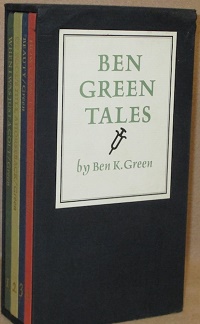 Author: Ben K Green
Publisher: Northland Press; 1st edition
Retail:
ISBN: 978-0873581158
Copyright: 1974
Pages:
Books by the Author
Last Trail Drive Through Downtown Dallas, The
- Details
- Written by Super User
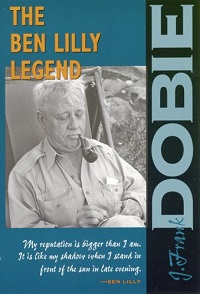 The Ben Lilly Legend brings back to life a great American hunter—the greatest bear hunter in history after Davy Crockett, by his own account and also by the record. J. Frank Dobie met Lilly and was so struck by this extraordinary man that he collected everything he could find about him.
Lilly was born in Alabama in 1856, followed the bear and the panther westward through Mississippi and Louisiana to Texas, leaving a trail of stories about his prowess as a hunter and his goodness as a man. He was at one time "chief huntsman" to Teddy Roosevelt, hunted in Texas and Mexico, and came to be known as the master sign reader of the Rockies.
Here are all the stories Ben Lilly told and a great many more Frank Dobie heard about him, put together in a fresh and fascinating contribution to American folklore.
First edition was apparently printed in 1952, with a reprint in 1981 by University fo Texas Press
Other books by the author:
Apache Gold and Yaqui Silver
Cow People
Coronado's Children
Ben Lilly Legend, The
Bob More: Man and Bird Man
I'll Tell You a Tale
Flavor of Texas, The
Legends of Texas Vol 1
Legends of Texas Vol 2
Longhorns, The
Mustangs, The
Mustangs and Cow Horses
Tales of Old Time Texas
Vaquero of the Brush Country, A
- Details
- Written by Super User
BENAVIDES, ALONSO DE (ca. 1578–1635). Father Alonso de Benavides, custos of the Franciscan missions in New Mexico from 1626 to 1629, the son of Pedro Alonso Nieto and Antonia Murato de Benavides, was born on the island of San Miguel in the Azores about 1578. He is noted for his memorials, which comprise one of the basic sources for Southwest history. He arrived in New Spain in 1598 and took vows with theFranciscans some three years later in Mexico City. Benavides filled the office of novice master at Puebla for a time and was later associated with the Inquisition, while residing at the friary of Cuernavaca. He was appointed custos in New Mexico in 1623 while serving as guardian at Temanatla. He did not reach New Mexico to assume his new duties until January 24, 1626.
Although his work was handicapped by a shortage of priests, Benavides was able to extend missionary activity in the province with ten new missions. When Fray Esteban de Peréa came to succeed him in April 1629, he brought twenty-nine new missionaries. Benavides returned to Mexico City in March 1630 and proceeded forthwith to Spain. He arrived the following August to present his 1630 memorial to King Philip IV. He then went to Agreda to interview Mother María de Jesús de Agreda about her relationship with Indians of the American Southwest, who claimed to have been instructed in the Catholic faith by the mysterious "Lady in Blue." Madre María told him that through spiritual translocation she had visited among the Indians many times to take them the divine message.
From 1633 to 1635 Benavides was in Rome as confessor to Francisco de Melo. During that time he presented to Pope Urban VIII his "Memorial of 1634," a revision and expansion of his 1630 treatise. On returning to Spain, Benavides received royal appointment as auxiliary bishop of Goa, India. He sailed for his new assignment on April 4, 1635, and died on the voyage. The two Benavides memorials, which complement rather than duplicate each other, are rich in geographical detail, descriptions of mission life, and ethnographic information, some of it pertaining to the Apaches and Jumanos of the Texas plains.
Alonso de Benavides, Benavides' Memorial of 1630, trans. Peter P. Forrestal (Washington: Academy of American Franciscan History, 1954).
Citation
The following, adapted from the Chicago Manual of Style, 15th edition, is the preferred citation for this article.
William E. Bard, "ADAMS, WALTER R.," Handbook of Texas Online (http://www.tshaonline.org/handbook/online/articles/fad08), accessed March 19, 2015. Uploaded on June 9, 2010. Published by the Texas State Historical Association.