Search
BlogRead the Latest News
Texas Authors Institute of History
A Unique Museum that saves history, inspires the future, depth and gives to the present..

- Details
- Written by Super User
Deborah Carter Mastelotto is a pathological entrepreneur, an obsessive remodeler, a minor student of quantum physics, an unapologetic observer of human nature and an indefatigable advice-giver. And she has a lovely little salon called Pink West in a hundred-year-old farm house in Dripping Springs, Texas.
- Details
- Written by Super User

Deborah Chelette-Wilson, an accomplished professional trauma counselor, life and parent coach, author, artist, and speaker lives in North East Texas with her husband of 38 years.
As a stress and trauma specialist she is passionate about helping people live healthier lives in mind, body and soul by transforming stress and trauma into triumph so they create the life they choose to live.
She has written and published 17 books and over 100 articles. Her novel Sanctuary Found, an inspirational story of a woman who survived domestic violence, won the 2017 1st Place in Women’s Fiction from the Texas Association of Authors.
She was pleased that her book Your Brain and Heart Want to Talk to You, designed to educate counselors, parents and educators of children on the impact of trauma on the development of children and their behavior won the 2018 Texas Association of Authors award in education.
She is presently working on two novels, a book of counselor wisdom sayings, and Three Pillars of Self-Care which will be a group coaching program for Women.

- Details
- Written by Super User
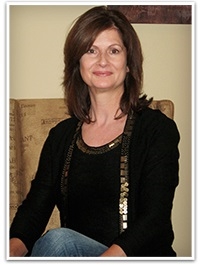
Deborah Reardon’s curiosity about life and passion for storytelling took root during her youth. She drew from the mystery of her surroundings and found inspiration from her daily discoveries. Like many novelists, Deborah’s winding path through a successful banking career and rousing travels, touched by remarkable friendships and family experiences, enriched her connection to the world around her and provided plenty of material for her stories to come.
Deborah, an Amazon best-selling author, particularly fond of her spirited take on a grade school writing assignment that sparked a teacher/parent consult, began to develop her writing skills from her quaint 2-bedroom Tudor while in her 20s and wrote her first manuscripts in the mid-90’s. From then on, she passionately pursued her craft with every moment she could spare. Deborah’s journeys have included everything from childhood cross-country visits to her parent’s native New York, trips to nearly every state in the US, and an international class in Europe that traversed many countries across the continent.
Colorful places and interesting people remain the cornerstones that shape all facets of her creative spirit to this day.
Deborah credits her collaborations with the Wisconsin writing community as having a huge impact on her confidence as a writer. It was during her time living on the outskirts of Milwaukee, that she thrust herself into an influential confluence of critiques, writing conferences and focused workshops. Persistence and a beautiful landscape sparked the beginning of Blue Suede Shoes.
Today, straddling life between Texas and her interests in the Valley of the Sun, Deborah is immersed in her handful of writing projects and entrepreneurial endeavors.
On the flip side, you might find her enjoying her most precious hideaway in Angel Fire, New Mexico, sipping wine with those dear to her, or pining for a retreat in Maine.
- Details
- Written by Super User
DE CORDOVA, JACOB RAPHAEL (1808-1868). Jacob Raphael De Cordova, Texas land agent and colonizer, was born in Spanish Town (near Kingston), Jamaica, on June 6, 1808, the youngest of three sons of Judith and Raphael De Cordova. Since his mother died at his birth, he was reared by an aunt in England. He was well educated and became proficient in English, French, Spanish, German, and Hebrew. His father, a Jewish Jamaican coffee grower and exporter, moved to Philadelphia, where he became president of Congregation Mikveh Israel in 1820. Jacob joined his father in Philadelphia, and there he married Rebecca Sterling about 1826 and learned the printing trade. His ancestors had supported themselves as printers for generations, beginning in the sixteenth century, when a De Cordova in Spain published Alvar Nzqez Cabeza de Vaca's explorations in Texas. In 1834 Jacob moved back to Kingston, where he and his brother Joshua started a newspaper, the Kingston Daily Gleaner, which continued for more than 150 years. In early 1836 Jacob went to New Orleans, where he shipped cargoes of staples to Texas during its struggle for independence. At this time he served a term as Grand Master of the Odd Fellows. After the battle of San Jacinto he visited the Republic of Texas to install members in the Odd Fellows lodges, the first established outside the United States.
He settled in Texas in 1839 and lived in Galveston and later Houston, where he was elected a state representative to the Second Texas Legislature in 1847. He served for one term but lost the election in 1849. De Cordova traveled extensively through Texas, including the frontier western areas. Through scrip and direct purchase he acquired large amounts of land to sell to settlers; at one time he had a million acres in scrip or title. To attract settlers to Texas, he made speeches on Texas in New York, Philadelphia, and other cities, and even to the cotton-spinners association in Manchester, England. His lectures were published on both sides of the Atlantic and were widely read. His land agency, which he owned with his half-brother Phineas De Cordova, became one of the largest such agencies that ever operated in the Southwest. De Cordova and two other men laid out the town of Waco in 1848-49. Town lots of an acre sold for five dollars, and nearby farmland brought two to three dollars an acre. At the urging of his wife, De Cordova reserved free sites for schools, churches, and commons.
De Cordova and Robert Creuzbaur compiled the Map of the State of Texas, first published in 1849. Much subsequent Texas cartography was based on this map, which was praised by Sam Houston on the floor of the United States Senate. Books De Cordova wrote that were influential in attracting settlers included The Texas Immigrant and Traveller's Guide Book (1856), and Texas, Her Resources and Her Public Men (1858), the first attempt at an encyclopedia of Texas. Jacob and Phineas De Cordova published two early Texas newspapers, the Texas Herald (also known as De Cordova's Herald and Immigrant's Guide) out of Houston and the Southwestern American out of Austin. The latter was at the solicitation of Governor Peter H. Bell and helped to pass the Compromise of 1850, which resulted in a $10 million payment to Texas for adjusted boundaries after annexation. In the 1850s De Cordova moved from Austin to Seguin, where five miles from town he built for his wife and five children a fine country home, which he called Wanderer's Retreat. In the 1860s he tried to develop a power project on the Brazos River in Bosque County for textile mills to spin Texas cotton. The Civil War brought financial reverses to De Cordova. When he died on January 26, 1868, he was buried in Kimball, but in 1935 his body and that of his wife were moved to the State Cemetery. He was survived by five children. The De Cordova Bend Reservoir, south of Fort Worth near Lake Granbury, was named for him.
BIBLIOGRAPHY: Henry Cohen, "The Jews in Texas," Publications of the American Jewish Historical Society 4 (1896). James M. Day, Jacob de Cordova: Land Merchant of Texas (Waco: Heritage Society of Waco, 1962). John H. Jenkins, Basic Texas Books: An Annotated Bibliography of Selected Works for a Research Library (Austin: Texas State Historical Association, 1983; rpt. 1988). Natalie Ornish, Pioneer Jewish Texans (Dallas: Texas Heritage Press, 1989). Malcolm H. Stern, First American Jewish Families: 600 Genealogies, 1654-1988, 3d ed. (Baltimore: Ottenheimer, 1991). Vertical Files, Barker Texas History Center, University of Texas at Austin.
Created and published by Natalie Ornish
Citation
"DE CORDOVA, JACOB RAPHAEL." The Handbook of Texas Online. [Accessed Tue Jul 13 8:44:08 US/Central 2004]. Posted on the Texas State Cemetary's web site at:http://www.cemetery.state.tx.us/pub/user_form.asp?pers_id=77