Search
BlogRead the Latest News
Texas Authors Institute of History
A Unique Museum that saves history, inspires the future, depth and gives to the present..

- Details
- Written by Super User
OLMSTED, FREDERICK LAW (1822–1902). Frederick Law Olmsted, noted landscape architect and writer of travel books, son of John Olmsted, was born in Hartford, Connecticut, on April 26, 1822. Prevented by an eye infection from entering college, he studied surveying for two years and attended scientific lectures at Yale. He worked for a time with an importing firm in New York and from 1844 to 1850 engaged in scientific farming. During this period he traveled extensively in New England, Canada, China, and Europe and wrote his first book, Walks and Talks of an American Farmer in England (1852). Interested in slave economy and commissioned to write articles for the New York Times, Olmsted made extensive tours throughout the South from 1852 to 1857. One of the products of this travel was A Journey through Texas (1857). On his route via Natchitoches down the Old San Antonio Road, through the German settlements, down to the coastal prairie towns, through San Antonio, Eagle Pass, Houston, and Liberty, Olmsted commented on all phases of town and country life in Texas.
Olmsted was a fervent opponent of slavery, and his journeys through Texas and the other slave states confirmed his deep-seated antipathy to forced servitude and to the South in general. Comparing the conditions he saw in the South with those of his native New England, he argued that because of the costs of maintaining slaves in bondage, free labor was ultimately cheaper than slave labor. He also argued that the practice of slavery was leading the Southern economy to ruin. He expounded on these views in The Cotton Kingdom, which included many of his previous writings on the South, among them his travelogue on Texas. The book, published in the fall of 1861, six months after the Civil War had begun, helped to galvanize antislavery sentiment in the North. From 1857 to 1895 Olmsted was engaged in landscape architecture, superintending Central Park and designing Riverside Park in New York as well as other parks and university campuses. He died on August 28, 1902.
Broadus Mitchell, Frederick Law Olmsted: A Critic of the Old South (Baltimore: Johns Hopkins Press, 1924; rpt., New York: Russell & Russell, 1968). Frederick Law Olmsted, The Papers of Frederick Law Olmsted, ed. Charles Capen McLaughlin (Baltimore: Johns Hopkins University Press, 1977-). Laura Wood Roper, "Frederick Law Olmsted and the West Texas Free-Soil Movement," American Historical Review 56 (October 1950). Laura Wood Roper, FLO: A Biography of Frederick Law Olmsted (Baltimore: Johns Hopkins University Press, 1973). Elizabeth Stevenson, Park Maker: A Life of Frederick Law Olmsted (New York: Macmillan, 1977).
Citation
The following, adapted from the Chicago Manual of Style, 15th edition, is the preferred citation for this article.
William E. Bard, "ADAMS, WALTER R.," Handbook of Texas Online (http://www.tshaonline.org/handbook/online/articles/fad08), accessed March 19, 2015. Uploaded on June 9, 2010. Published by the Texas State Historical Association.
- Details
- Written by Super User
Author Sandra Fox Murphy
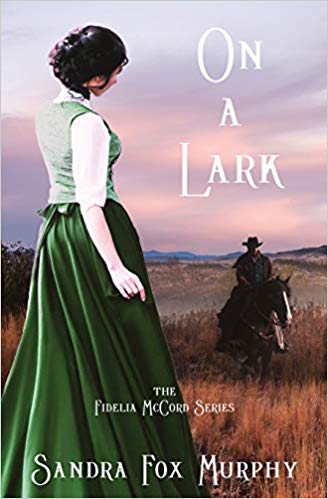
On a Lark
Synopsis
On a Lark (The Fidelia McCord Series, Book 2)
In On a Lark, Fidelia McCord has become the only surviving child of John and Mariah McCord of Pond Springs. After having borne great loss and hardship in mid-nineteenth century Texas - where moments of jubilation and jeopardy carry a girl to womanhood - Fidelia knows the weight of her choices. At the same time, far away in North Carolina, the Maloney brothers, cooking mash into whiskey in the Appalachian mountains, are making their own life-changing decisions, with Miles Maloney trying to keep his brother Jackson in check and away from the gallows. But, as Fidelia and Miles each forge their own path to a future, destiny has plans of its own.
"A riveting and realistic novel of the westward expansion, inspired by real people. Life on the trail and on the Texas frontier was not easy for anyone, much less a seven-year old girl whose faith was tested...but those who persevered and survived would find new joys."
--Miles O'Neal, author of The Dragon Lord Chronicles
"Ms. Murphy develops the powerful characters of this story in such a way that they come alive and you feel that you know each one of them personally. On a Lark will linger long after reading it."
--Jane Caraway, author of Baby in a Mailbox
*******
Sandra Fox Murphy is the author of the novels That Beautiful Season and A Thousand Stars, as well as the Fidelia McCord Series, including Let the Little Birds Sing. Her collection of poems, Aging Without Grace, was released in July 2019. Originally from Glasgow, Delaware, she lives in central Texas where she hunts down small-town history.
- Details
- Written by Super User
Bessie David
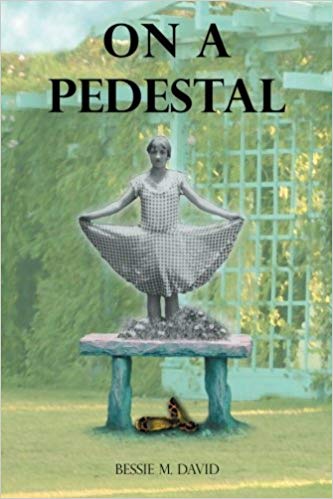
For a child, a grandmother can be as enchanting as a fairy tale heroine. Her place in the hierarchy of the family is the most beloved and admired. My grandmother, aka Nanny, was no exception. She was colorful, eccentric and very opinionated. What I looked forward to the most, on visits to her house, was to go inside her closet, and admire rows and rows of her shoes. I would spend an entire afternoon prancing around in a beaded pump or a leopard boot.
She wasn’t the type of grandmother that sent you birthday cards or attended your ballet recital. By the time I came along, she had ten other grandchildren and an ostentatious lifestyle. She gave lavish Christmas parties for her family and entertained everyone with her piano playing.
As a young adult and aspiring writer, I asked her if she had ever thought about writing her life story. Her zest for life was infectious and it seemed the story of her life would be full of pleasantries and happy times. She said many people had asked her that question. I naively inquired if she wanted to write her story with me. She seemed amused and replied, “If you are up to it”, then she laughed.
I had no idea what I was about to become privy to, nor did I expect to hear such intimate details. I had high expectations of what her life must have been like. I was not prepared for the tales of horrific relationships with men and the neglect bestowed upon her and her children. With pen in hand, I asked her to recall her first memory.
Buy Book
- Details
- Written by Super User
Author Maryann Miller
One Small Victory
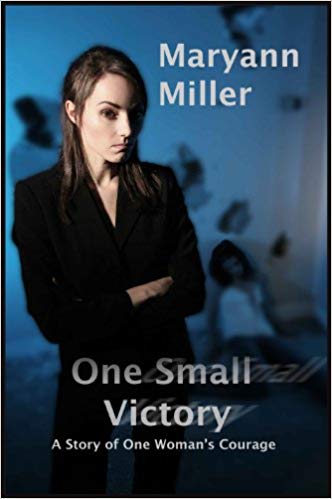
ADVANCE PRAISE "With heart and soul and plenty of suspense, One Small Victory careens toward an outcome that could end in disaster— but could also be one small victory." Margaret Marr “One Small Victory is great Romantic Suspense and a read you won't want to miss.” Victoria Kennedy, Midwest Book Reviews “One Small Victory is not for the faint of heart, but it is an excellent, well-crafted novel. The tension is all pervasive, and heat, rage, sorrow, despair, and all-enveloping terror fill every page.” Carolyn Crisher “One Small Victory is an amazing, heart pounding, emotional tale about one mother's love of her children, and the steps she takes to protect them from harm.” Jennifer Lawrence for Amazon.com **** FOUR STARS "A compelling read of a grieving mother's crusade to rid the streets of her home town of drugs, and those who lure our children into addiction." Laura Castoro, author of Icing on the Cake & Love on the Line “One Small Victory is one huge win for author Maryann Miller and her readers ” Paula Stallings Yost, Editor/Author. “One Small Victory is a riveting journey through fear, love, and a woman's determination to make things better.” Slim Randles, author.