Search

BlogRead the Latest News


Texas Authors Institute of History

A Unique Museum that saves history, inspires the future, depth and gives to the present..

In the spring of 2015, a visionary founder recognized a glaring gap in the preservation and cultivation of Texas Authors' rich legacy. While smaller museums had emerged dedicated to specific genres penned by Texan authors, such as children's literature and Westerns, the overarching tapestry of Texas's literary heritage remained largely uncollected, devoid of both print and electronic preservation.

Enter B Alan Bourgeois, who saw an opportunity not just to safeguard this heritage but to revolutionize how Texas authors were recognized globally. From this vision was born the Texas Authors Institute of History, Inc., a nonprofit organization with a dual mission: to chronicle the profound history of Texas authors and to empower the present and future generations of literary talents.

However, this journey, once envisioned as straightforward, has been riddled with unforeseen challenges. This section unveils the institute's objectives achieved thus far while shedding light on the adversities faced along the path. It is important to note that the following pages offer a glimpse into the comprehensive history of TAIH, with a more exhaustive account available on its website at http://TexasAuthors.Institute.

The institute's inception in 2015 seemed promising, given Bourgeois's close ties with the Texas author community. Creating a website to spotlight the thousands of Texan authors and their works was a logical step. Yet, the real challenge lay in coaxing authors to submit their information for incorporation—a task that proved to be the museum's most formidable hurdle, then and now.

Even today, the notion of receiving free marketing through the website remains unfamiliar, met with anxiety or disregard by many Texas authors. The struggle to motivate approximately 77,000 authors to participate persists.

In 2017, the Lone Star Book Festival (LSBF) was conceived by Bourgeois, though its first iteration in Dallas was fraught with obstacles, leading to its suspension. A rebranded festival emerged in 2019, focusing on a multidisciplinary approach involving art, music, film, and authors. However, the pandemic thwarted plans for the festival in 2020 and 2022, deepening challenges.

Also in 2017, Bourgeois was able to arrange for the recognition of TAIH through a Texas State House Resolution. A total of 34 Texas Authors attended the event at the State House of Representatives. A copy of the resolution is available on the group’s website.

By 2022, TAIH faced dwindling income sources, particularly due to the pandemic's financial toll. Bourgeois's calls for support went unanswered, leading to the heartbreaking loss of storage units and a vast book collection accumulated over the years.

Undeterred, Bourgeois is resolute in his commitment to TAIH's future. The website has expanded to feature over 1,000 authors and their works, yet many authors remain reluctant to contribute their information.

TAIH stands as a testament to authors' authentic stories, bridging the gap between history and personal insight. The vision extends to a future physical museum, housing a diverse collection, offering writing classes, and serving as a hub for creators to flourish.

This journey continues, and your support is pivotal. Donations, both monetary and in-kind, are invaluable to TAIH's growth. Visit http://TexasAuthors.Institute to learn how you can play a vital role in preserving Texas Authors' legacy and nurturing future voices.

OUSLEY, CLARENCE N. (1863–1948). Clarence N. Ousley, journalist and writer, was born to William Henry and Henrietta R. (Scuggs) Ousley on December 29, 1863, in Lowndes County, Georgia. He earned an A.B. degree from the Agricultural and Mechanical College of Alabama in Auburn in 1881. Though he had originally intended to study law, he reportedly became disenchanted with the prospect of a slow climb to success in the legal field and instead moved to Texas in hope of quicker advancement. He settled in Waxahachie and accepted a teaching position at Marvin College. In 1885 he operated as a merchant, and from 1886 to 1887 he served as editor of Farm and Ranch, a Dallas publication. In 1888 he returned to Waxahachie as the first superintendent of the local public school system. On November 8, 1888, he married Mary Young, a Waxahachie school teacher. The couple raised two daughters. Ousley became editor of the Dallas Weekly News in 1889. He subsequently became managing editor of the Galveston News (1890) and owner and editor of the Galveston Tribune (1893). He was a member of the Galveston Deep Water Committee, which led the campaign for the commission form of city government in that city after the devastating Galveston hurricane of 1900.

Ousley became managing editor of the Houston Post in 1901. In 1903, with several associates, he purchased the Fort Worth Gazette and recast it as the Fort Worth Record. He was editor until he sold his interest in the paper in 1913. From 1913 to 1914 he served on the American commission appointed to study and report on the system of rural credits employed by various European states. The commission's findings and recommendations led to the establishment of the Federal Land Bank of the United States. Upon completion of the commission's work, Ousley accepted an appointment to direct the agricultural extension service of Texas A&M College, a position he held from 1914 to 1917. From 1917 to 1919 he served as United States assistant secretary of agriculture. In 1919 Ousley returned to Fort Worth and soon became associated with Globe Laboratories, which he served as chairman of the board from September 21, 1921, until his death. In the 1920s he was also a director of the Texas Safe Farming Association, which sought to put Texas agriculture on a sounder economic basis through diversification and other improvements. In 1929 Ousley was manager of the East Texas Chamber of Commerce. He also remained an active commentator on local, national, and international affairs, in columns contributed to the Fort Worth Star-Telegram.

Ousley was long involved in Democratic party politics. In 1904 he served as a delegate-at-large to the Democratic national convention. He made a brief run for the Democratic gubernatorial nomination in 1914, offering himself as an opponent of prohibition, but withdrew from the race on March 26. He subsequently endorsed Thomas Henry Ballqv, who ran on the prohibition ticket against James Edward Ferguson, the eventual winner. In 1922 Ousley ran for the Democratic nomination for the United States Senate and placed fifth out of seven. As a supporter of both agricultural science and public education, Ousley played a leading role in establishing two state-supported institutions of higher learning: Grubbs Vocational College (now the University of Texas at Arlington), which opened in 1917 as a branch of A&M, and the Girls' Industrial College (now Texas Woman's University), which opened in 1903. Ousley was a member of the latter school's board of regents from 1904 to 1910 and served as first chairman of the board. In 1910 Governor O. B. Colquitt appointed Ousley a regent at the University of Texas, a position he led until 1914, part of the time as chairman. Beginning in 1907 he was also chairman of the Conference for Education in Texas, which campaigned for several years to improve rural schools in the state.

Ousley pursued other writing interests in addition to journalism. With Ben C. Mason he published "Fra Paola": A Play in Four Acts in 1896. Ousley's Rings O' Smoke, a collection of poetry, came out in 1902. He also published History of the Agricultural and Mechanical College of Texas (1935) and several textbooks: The Student's History of Our Country, for Grammar Grades (1912), coauthored with Robert Green Hall and Harriet W. Smither and rereleased as A History of the United States, for Grammar Grades (1920); and Background of American Government (1924). Ousley also edited a volume about the Galveston storm entitled Galveston in 1900 (1900). Ousley was a Baptist and a Mason. He belonged to the Phi Delta Theta fraternity, the Fort Worth Club, and the Lake Ellis Hunting and Fishing Club. He was a member of the American Academy of Political Science, the American Economic League, the Farm Economic Association, and the National Cottonseed Products Association. In 1902 he was elected president of the Texas Press Association. He was also a recipient of an honorary A.M. degree from Simmons College in Abilene. Ousley died at his home at the Fort Worth Club on August 5, 1948, and was buried in Oakland Cemetery in Dallas.

BIBLIOGRAPHY: 

Sam Hanna Acheson, Herbert P. Gambrell, Mary Carter Toomey, and Alex M. Acheson, Jr., Texian Who's Who, Vol. 1 (Dallas: Texian, 1937). F. B. Baillio, History of the Texas Press Association(Dallas: Southwestern Printing, 1916). Florence Elberta Barns, Texas Writers of Today (Dallas: Tardy, 1935). Fort Worth Star-Telegram, August 6, 1948. Library of Southern Literature (16 vols., Atlanta: Martin and Hoyt, 1909–13). Vertical Files, Dolph Briscoe Center for American History, University of Texas at Austin. Clarence R. Wharton, ed., Texas under Many Flags (5 vols., Chicago: American Historical Society, 1930). Who Was Who in America, Vol. 2.


Citation

The following, adapted from the Chicago Manual of Style, 15th edition, is the preferred citation for this article.

William E. Bard, "ADAMS, WALTER R.," Handbook of Texas Online (http://www.tshaonline.org/handbook/online/articles/fad08), accessed March 19, 2015. Uploaded on June 9, 2010. Published by the Texas State Historical Association.


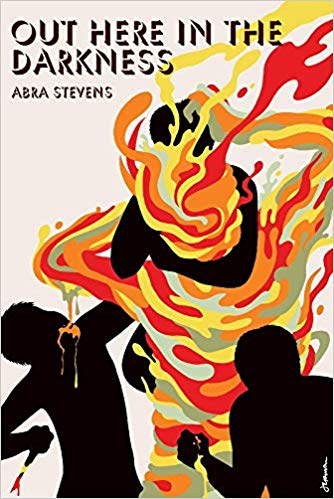
Abra Stevens 

$24.00


Points to Purchase:240
Points Earned:24
Bonus Points Earned:0


OUT HERE IN THE DARKNESS is a never before told true crime story of unimaginable horror and a killer's 33-year search for redemption. In 1985, a group of Houston teenagers torture and murder one of their companions; the next month, two more acts of violence occur. Now, over thirty years later, plunge into the shocking details, investigations, and transcripts as you journey through the crimes, the pursuit, and the trials. With a rare in-depth glimpse inside the mind of a teen turned killer, you may find explanations for questions we all ask in the face of such horrors: Why? What becomes of us now?


Buy Book


$24.00

Buy HERE 


Synopsis
OUT HERE IN THE DARKNESS is a never before told true crime story of unimaginable horror and a killer's 33-year search for redemption. In 1985, a group of Houston teenagers torture and murder one of their companions; the next month, two more acts of violence occur. Now, over thirty years later, plunge into the shocking details, investigations, and transcripts as you journey through the crimes, the pursuit, and the trials. With a rare in-depth glimpse inside the mind of a teen turned killer, you may find explanations for questions we all ask in the face of such horrors: Why? What becomes of us now?

Site Menu