Search
BlogRead the Latest News
Texas Authors Institute of History
A Unique Museum that saves history, inspires the future, depth and gives to the present..

- Details
- Written by Super User
POETRY SOCIETY OF TEXAS. The Poetry Society of Texas, organized in 1921, grew out of a movement initiated by Therese Kayser Lindsey, a Tyler poet. After obtaining information from the state poetry society of Charleston, South Carolina, she called a meeting of interested persons in Dallas, where plans were made for the organization of a statewide society. Mrs. Lindsey was chosen corresponding secretary; the other charter members were Hilton Ross Greer, president; Karle Wilson Baker, vice-president; Clyde Walton Hill, treasurer; Jewell Wurtzbaugh, recording secretary; and Whitney Maxwell Montgomery and Louella Styles Vincent, directors. In 1922 the society published its first yearbook, received its charter under state law, and began to function actively. Its aim was to enlist public interest in poetry. Membership was open to anyone in sympathy with the society's general aims. In 1994 the society had 600 members in twenty-five chapters across the state; headquarters were in Dallas. Active members must be native Texans, residents of Texas, or former residents of Texas who have been active in the society in the past; associate memberships have no geographical qualifications. Meetings are held the second Saturday evening of each month, except for June and November. The annual awards dinner, held in November, distributes ninety-five awards with prizes ranging from $25 to $350. In June the society presents its Student Awards Festival. Meetings include lectures by distinguished speakers and poetry readings. The society sponsored an annual book-publication contest from 1925 to 1933. It holds annual and monthly contests with awards for individual poems. It has a permanent collection in the Dallas Public Library comprising several hundred books and pamphlets by Texas poets. Since 1922 the society has annually published a yearbook containing general information, a summary of the year's activities, and the monthly prize-winning poems of members. It also publishes a monthly news bulletin for members. Budd Powell Mahan was president of the society in 1994.
Poetry Society of Texas, A Book of the Year (Dallas, 1939, 1962, 1972).
Citation
The following, adapted from the Chicago Manual of Style, 15th edition, is the preferred citation for this article.
William E. Bard, "ADAMS, WALTER R.," Handbook of Texas Online (http://www.tshaonline.org/handbook/online/articles/fad08), accessed March 19, 2015. Uploaded on June 9, 2010. Published by the Texas State Historical Association.
- Details
- Written by Super User
Frank P. Daversa
Buy Book
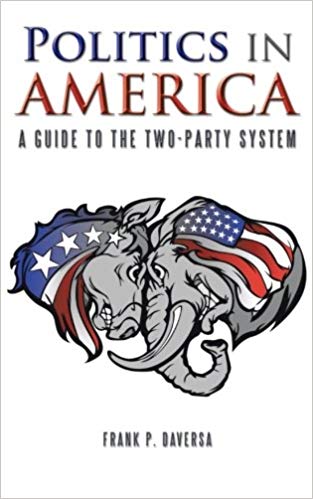
This remarkable book enlightens novice and undecided voters about politics in America. To start with, it describes the types of people who make up the two major political parties. Liberal to conservative democrats and libertarians to social conservatives are covered. Next, it discusses the parties’ respective histories, ranging from 1800 to the present day. Then it explains the ideologies of each, from social issues to economics to the environment. This is followed by a summary of landmark Congressional legislation, from the Glass-Steagall Act to the Affordable Care Act (a.k.a. “Obamacare”). Next, it provides terse commentary on issues relevant to the 2012 election, from taxes to abortion to national security. Lastly, it summarizes concepts every voter should understand before casting their vote on Election Day.
- Details
- Written by Super User
POLLEY, JOSEPH BENJAMIN (1840–1918). Joseph Benjamin Polley, Confederate soldier and writer, was born near Bailey's Prairie, Brazoria County, Texas, on October 27, 1840, the sixth of eleven children of Joseph Henry and Mary (Bailey) Polley. Joseph Henry Polley, a native of New York, had first come to Texas with Moses Austin in 1819 and returned with Stephen F. Austin in 1821 as one of the Old Three Hundredcolonists. In 1847 the family moved to a farm on Cibolo Creek about thirty miles east of San Antonio. In 1861 Polley graduated from Florence Wesleyan University at Florence, Alabama, and returned to Texas to enlist in Company F of the Fourth Texas Infantry, one of the regiments of the famed Hood's Texas Brigade of the Army of Northern Virginia. Polley served through almost all of the major battles of the brigade, received a head wound at the battle of Gaines Mills in 1862, and lost his right foot at the battle of Darbytown Road near Richmond on October 7, 1864.
After returning to Texas at the end of the war, he read law and was admitted to the bar in 1868 but did not establish a practice until 1876, when he moved to Floresville. He served as Wilson county attorney in 1877 and 1878 and as a member of the Sixteenth Legislature in 1879. In 1866 he married Mattie LeGette; the couple had four children. Polley was elected commander of the Texas Division of the United Confederate Veterans. He died in Floresville on February 2, 1918.
His memoir of his army service, Hood's Texas Brigade (1910), is considered one of the classics of Civil War literature. Charles W. Ramsdell noted that "the author's happy style has made the book very readable, very unlike the great bulk of regimental and brigade histories." Polley's first Civil War book, A Soldier's Letters to Charming Nellie (1908), while informative and entertaining, has been suspected to be a post-war fabrication rather than the genuine Civil War letter cycle which it is represented to be. Polley was also a frequent contributor to Confederate Veteran.
John Henry Brown, Indian Wars and Pioneers of Texas (Austin: Daniell, 1880; reprod., Easley, South Carolina: Southern Historical Press, 1978).
Citation
The following, adapted from the Chicago Manual of Style, 15th edition, is the preferred citation for this article.
William E. Bard, "ADAMS, WALTER R.," Handbook of Texas Online (http://www.tshaonline.org/handbook/online/articles/fad08), accessed March 19, 2015. Uploaded on June 9, 2010. Published by the Texas State Historical Association.
- Details
- Written by Super User
Bates, Valerie D
 Author: Valerie D. Bates
Publisher: Arcadia Publishing
Retail: $19.99
ISBN: 978-0738596877
Copyright: February 2013
Pages: 128
In the 1830s, a small community known as El Fronton de Santa Isabel set roots on the banks of the Laguna Madre Bay. Official claim for the land was granted to Don Rafael Garcia as part of the Potrero (“Pasture”) de Santa Isabel in 1828. Less than two decades later, Point Isabel was home to Zachary Taylor’s Fort Polk and found itself a home base during the Mexican-American War. In 1853, construction was completed on the Point Isabel lighthouse, a navigational beacon with a 16-mile view. Port Isabel was incorporated in 1928, and a deep-water port shipped its first commercial load in 1937. By the 1950s, Port Isabel was the “Shrimping Capital of the World,” and the first Queen Isabella Causeway connected South Padre Island to the mainland. Port Isabel continues to deepen its roots on the banks of the Laguna Madre Bay. Heritage and cultural tourism, a relaxed quality of life, and an appreciation for all things coastal are synonymous with Port Isabel.