Search
BlogRead the Latest News
Texas Authors Institute of History
A Unique Museum that saves history, inspires the future, depth and gives to the present..

- Details
- Written by Super User
Rita Louise Wilcox was the oldest of five Irish Catholic children raised in East Texas. All were parochial school educated, which encouraged prolific writings from an early age. Summers were spent riding bikes through the woods, swimming in the Gulf of Mexico, and generally enjoying the outdoors sans television. It was a simpler time, without digital devices, where books were the only method to take you to far away places. Imagination was an essential part of entertainment, so it was a time that encouraged much story telling.
The story of Captain Vadim Alevsky was not imagined, however, as Rita’s grandmother (aka Mamou) knew the remaining Romanov family well. She befriended this family, transplanted from such a foreign world, because she was one to seek out the few available foreigners in an effort to broaden her knowledge of the world. She tried her best to enliven their lonely lives by introducing these isolated immigrants to the well-known hospitality of Texas. As the Romanov’s learned to trust Mamou and her granddaughter Rita, they shared their amazing tale of escape from a certain death to a warm, welcoming land of hope.
You can find out more about Rita Wilcox as an author at “islandwidow.wordpress.com”, followed by an international audience. She now teaches part-time in the Galveston ISD. Having shared her story with many in the classroom, she found two things important to the desire to read this story. The students loved the romantic story line and the fact that is based on the truth. They also felt they are getting to know a young Russian aristocrat who lived this story and survived to tell the tale. While Rita is new to the world of published literature, she has written voluntarily for her entire adult life, from high school newspapers to sailing club newsletters. She enjoys sharing stories collected over a very active lifetime
- Details
- Written by Super User
ita Ownby Holcomb is a fourth generation Texan who has always been fascinated by the question, "Where do we come from?" Her genealogy research led to the birth of the A Twist of Tobacco series. She is a proud member of the Daughters of the American Revolution and the United Daughters of the Confederacy. For thirty years she served on or presided over various civic organizations including, the Community Theater, Historic Museum, Texoma Council of Governments and Meals-on-Wheels. After serving as an elected City Council member she retired from civic service to become a buyer and seller of vintage clothing and accessories. Listed in Who's Who in American Women in 2000 and Who's Who in America in 2003 Rita is now a full time author. Married since 1972 to Darrell Holcomb, they have one son, Stuart B. Holcomb.
- Details
- Written by Super User
Author: Lynn Hobbs
River Town
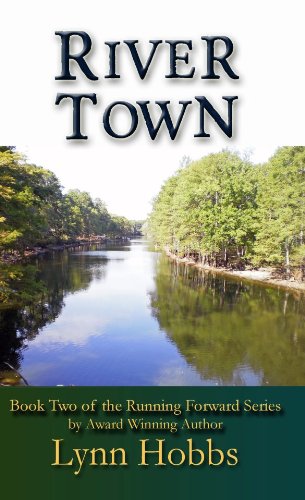
Synopsis
A powerful, faith and family saga continues: inspiring, suspenseful, action-packed. Susan Penleigh relocates to Texas in 2011 during the worst drought in history with terrifying wildfires, a new job at a high school, and many people to challenge her faith. From troubled teenagers to an arrogant boss, scripture helps a woman's journey through modern family issues. A compelling page turner that will enthrall teens, men, and women! Book two of the Running Forward Series.
- Details
- Written by Super User
RIVERA, TOMÁS (1935–1984). Tomás Rivera, author, poet, and teacher, was born on December 22, 1935, in Crystal City, Texas, the son of Florencio M. and Josefa (Hernández) Rivera. After graduating from Crystal City High School, he followed in his father's footsteps and worked as a migrant worker until he was twenty. He received B.S. and M.Ed. degrees in English education from Southwest Texas State University and taught in public schools and at Southwest Texas Junior College in Uvalde. He then went to the University of Oklahoma, where he earned his M.A. in Spanish literature and, in 1969, his doctorate in Romance languages and literature. After finishing his Ph.D. he taught at Sam Houston State University and served on the planning team that built the University of Texas at San Antonio, where he served as chairman of the Romance language department, associate dean, and finally vice president. In 1978 he accepted the position of chief executive officer at the University of Texas at El Paso. The next year he became chancellor of the University of California at Riverside. Rivera was best known for his work ...y no se lo tragó la tierra (1971), which has been translated into English by Herminio Ríos as And the Earth Did Not Part. Rivera received the Quinto Sol Award for that book in 1971. He also contributed to a book of poems, Always and Other Poems (1973), and was a frequent contributor to El Grito, a bilingual journal of Mexican-American thought. He published numerous short prose pieces and a wide range of essays on literature and higher education.
Aside from his literary contributions, Rivera was active in professional and private organizations. He served as president of the Alamo Valley chapter of the American Association of Teachers of Spanish and Portuguese in 1971, and he was one of the founders and presidents of the National Council of Chicanos in Higher Education. Presidents James Carter and Ronald Reagan appointed him to commissions on higher education. He was also a member of the board of the Carnegie Institute and the board of directors of the Times-Mirror Company. He was instrumental in the formation of the Tomás Rivera Institute for Public Policy on Chicanos in Higher Education on the Pomona College campus. He received an honorary doctorate from Santa Clara University and was designated a distinguished graduate by Southwest Texas State University. He served with distinction on the boards of the Corporation for Public Broadcasting and the Educational Testing Service of Princeton, New Jersey. Rivera married Concepción Garza on November 27, 1978. He had three adult children at the time of his death in Fontana, California, on May 16, 1984. Posthumously, the University of Texas at Austin Board of Regents inaugurated a Tomás Rivera Professorship in Spanish Language and Literature. The University of California named the plaza facing the Riverside Administration Building in his honor.
Julio Martínez and Francisco A. Lomelí, eds., Chicano Literature: A Reference Guide (Westport, Connecticut: Greenwood, 1985). Who's Who in America, 1980–81.
Citation
The following, adapted from the Chicago Manual of Style, 15th edition, is the preferred citation for this article.
William E. Bard, "ADAMS, WALTER R.," Handbook of Texas Online (http://www.tshaonline.org/handbook/online/articles/fad08), accessed March 19, 2015. Uploaded on June 9, 2010. Published by the Texas State Historical Association.