Search
BlogRead the Latest News
Texas Authors Institute of History
A Unique Museum that saves history, inspires the future, depth and gives to the present..

- Details
- Written by Super User
Author Alfred Rogers, a retired librarian from the University of Texas Libraries system, grew up in Ranger and has had a long-standing interest in its history. Using vintage photographs from the Ranger Historical Preservation Society, local residents and museums, a number of libraries and archival collections, and his own collection, Rogers tells the story of the village that became one of the best-known oil boomtowns anywhere.
Citation
From publishers web site ArcadiaPublishing.com and Amazon.com as of December 22, 2016
Books by the Author:
- Details
- Written by Super User
Buy Book

Synopsis
"I have lived alone for so long, but now that I have found you, I no longer wish for that cold existence."
A wounded Texas Ranger is sheltered by an ostracized healer. A vengeful wasteland warrior finds comfort with a colorful streetwalker. An information dealer promises life to a desperate outlaw chasing death.
Rogues and Wild Fire is a beautifully crafted collection of speculative fiction stories featuring world-weary men and women with cracks in their hearts--and the steadfast rogues who rekindle their passions. The scars of former hurts fade as the couples join their beautiful, fiery spirits in body and soul.
With hunters and witches, humans and shape-shifters, detectives and demons, seers and soothsayers, and soldiers from two eras, these tales illustrate the bliss that is possible when the past is overcome and love spreads unbridled and free--
- Details
- Written by Super User
Nelson, Willie
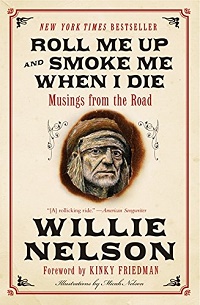 Author: Willie Nelson
Publisher: William Morrow; First Edition edition
Retail: Varies
ISBN: 978-0062193643
Copyright: November 13, 2012
Pages: 175
In Roll Me Up and Smoke Me When I Die, Willie Nelson muses about his greatest influences and the things that are most important to him, and celebrates the family, friends, and colleagues who have blessed his remarkable journey. Willie riffs on everything, from music to poker, Texas to Nashville, and more. He shares the outlaw wisdom he has acquired over the course of eight decades, along with favorite jokes and insights from family, bandmates, and close friends. Rare family pictures, beautiful artwork created by his son, Micah Nelson, and lyrics to classic songs punctuate these charming and poignant memories.
A road journal written in Willie Nelson's inimitable, homespun voice and a fitting tribute to America’s greatest traveling bard, Roll Me Up and Smoke Me When I Die—introduced by another favorite son of Texas, Kinky Friedman—is a deeply personal look into the heart and soul of a unique man and one of the greatest artists of our time, a songwriter and performer whose legacy will endure for generations to come.
Editorial Reviews
Review
“Nelson’s unmistakable voice shines through . . . funny, inspirational and bawdy, with a well-honed sense of humor.” (Kirkus Reviews)“An irreverent, entertaining read. Humble, optimistic, and quick to give credit to those around him for contributing to his success, Nelson is a charming narrator.” (Publishers Weekly)
“Nelson takes us for a rollicking ride along the highways and byways of his long life and career in this rambunctious, hilarious, reflective, and loving memoir.” (American Songwriter)
“Compelling page-turner . . . for all his fame and accessibility, he still has so much wisdom left to share.” (Jambands.com)
“So many decades into his fabled life and career, Willie fans pretty much know what to expect from him. And he does not let his readers down with his Musings From the Road. ” (Country Music Television, Nashville Skyline blog)
- Details
- Written by Super User
Citation
The following, adapted from the Chicago Manual of Style, 15th edition, is the preferred citation for this article.
William E. Bard, "ADAMS, WALTER R.," Handbook of Texas Online (http://www.tshaonline.org/handbook/online/articles/fad08), accessed March 19, 2015. Uploaded on June 9, 2010. Published by the Texas State Historical Association.