Search
BlogRead the Latest News
Texas Authors Institute of History
A Unique Museum that saves history, inspires the future, depth and gives to the present..

- Details
- Written by Super User
SIMPSON, FRIENCH (1848–1923). Friench Simpson, businessman, author, and public official, son of James Hendley and Emily (Dye) Simpson, was born in Fairfax County, Virginia, on February 13, 1848. His early training was at the Leesburg Academy. He arrived in Texas in 1862 and continued his education in the common schools of the state. In 1865 he enlisted as a private in Company A, Thirteenth Texas Volunteer Infantry. He subsequently returned to his family's home in Lavaca County and engaged in farming and planting from 1866 to 1873. In 1874–75 he served as a member of the Texas State Geological Survey (see GEOLOGICAL SURVEYS OF TEXAS). In 1877 he was admitted to the bar and began the practice of law. He married Jennie Harbert of Columbus on February 11, 1877. In 1888 Simpson became a banker at the Simpson Bank of Columbus, founded by his father fifteen years earlier, and upon his father's death in 1889, he assumed ownership of the establishment with partner Carey Shaw. Simpson also helped organize the First National Bank of Hallettsville, where he remained a cashier for twenty-five years. A slump in the local economy in 1913 placed the Simpson Bank in an unsound financial position, and it was forced into bankruptcy and closure in October 1914. The Simpson Ranch in Lavaca County was sold by the bank's trustees in partial satisfaction of creditors. In 1884 Simpson was elected mayor of Columbus. He represented District Eighteen, which comprised Lavaca, Colorado, and Fayette counties, in the Senate of the Twenty-third and Twenty-fourth Texas legislatures, 1893–95. He was a devout Methodist, director of the Masonic Orphans' Home in Fort Worth from 1890 to 1900, and grand treasurer of the Masonic Grand Lodge of Texas in 1900. In the same year he published a volume called A Study of Nature and Other Poems (1900) and later published A Paraphrase of the Quatrains of Omar Khayyam (1909). From 1917 to 1919 he served as chairman of the Lavaca County Selective Service Board. Simpson died at his home in Hallettsville on March 23, 1923.
Colorado County Historical Commission, Colorado County Chronicles from the Beginning to 1923 (2 vols., Austin: Nortex, 1986). Davis Foute Eagleton, comp. and ed., Writers and Writings of Texas (New York: Broadway, 1913). Members of the Legislature of the State of Texas from 1846 to 1939 (Austin: Texas Legislature, 1939). Who Was Who in America, Vol. 1.
Citation
The following, adapted from the Chicago Manual of Style, 15th edition, is the preferred citation for this article.
William E. Bard, "ADAMS, WALTER R.," Handbook of Texas Online (http://www.tshaonline.org/handbook/online/articles/fad08), accessed March 19, 2015. Uploaded on June 9, 2010. Published by the Texas State Historical Association.
- Details
- Written by Super User
SIMPSON, HAROLD BROWN (1917–1989). Harold B. Simpson, Air Force officer and historian, son of Harry Leon and Louise (Brown) Simpson, was born in Hindsboro, Illinois, on April 3, 1917. He graduated from the University of Illinois (B.S., 1940; M.S., 1950) and Texas Christian University (Ph.D., 1969). Despite a degree in accounting, he was commissioned a second lieutenant in the United States Army Cavalry when he graduated in 1940 but was transferred to the Air Force (then known as the Army Air Corps) in 1941. During World War II he served in the Southwest Pacific for thirty-three months with the 374th Troop Carrier Group and was decorated with a Presidential Unit Citation (with two Oak Leaf Clusters), the Air Force Commendation Medal, and the Southwest Pacific Campaign Medal (with three Battle Stars).
After the war he stayed in the Air Force and rose to the rank of colonel in 1954, graduating from the Air Tactical School, the Air Command and Staff College, the Armed Forces Staff College, and the Air War College. In 1959 he was assigned to be Comptroller of the Twelfth Air Force in Waco, Texas, and served in that position until his retirement in 1963 after twenty-three years of service.
All of his life Simpson had a strong interest in the Civil War with special interest in Confederate military leadership, especially John Bell Hood. By the early 1950s he was publishing short papers, and he began collecting volumes on Confederate history. After his discharge from the Air Force in 1963, he joined the history faculty at Hill Junior College (now Hill College), Hillsboro, Texas. He was still in uniform when he lectured his first classes, and the students called him "the Colonel," which became their name for him for the remainder of his career.
His dissertation at Texas Christian University was The History of Hood's Texas Brigade, 1861–1865, after which he completed a four-volume history of Hood's Brigade. After its publication he became known as the authority on this unit. Subsequently he authored, edited, or contributed to twenty-six volumes, including Gaines' Mill to Appomattox (1963), Cry Comanche: Second U.S. Cavalry in Texas, 1855–1861 (1979), Brawling Brass: North and South (1960), and Audie Murphy, American Soldier (1975). In addition, he founded the Hill College Press in 1964 and was editor for the many books published during his life.
Simpson reactivated the Hood's Texas Brigade Association and was active in the Sons of Confederate Veterans and the Civil War Round Tables of Waco and Fort Worth. He was a fellow of the Texas State Historical Association and the Company of Military Historians, and he received numerous awards for his publications and his efforts on behalf of preserving Civil War history. In 1979 he began the Confederate History Symposium at Hill College, an event which drew capacity crowds annually. His personal library became the nucleus for the Confederate Research Center in 1963, and he began collecting material for what became the Texas Heritage Museum, both now part of the Harold B. Simpson History Center at Hill College.
On March 1, 1941, Simpson married Lorraine Hennings; they had five children. On September 5, 1977, he married Vera DeLandri. The Colonel continued to lecture his classes at Hill College after being diagnosed with terminal cancer, surviving by force of will until after final exams that semester. He died at Hill Regional Hospital on May 31, 1989.
Norman D. Brown, Southwestern Historical Quarterly 93 (April 1990). Harold B. Simpson, Brawling Brass, North and South: The Most Famous Quarrels of the Civil War, 2nd ed. comp. by Buddy D. Patterson (Hillsboro, Texas: Hill College Press, 1990). Harold B. Simpson Personnel File, Harold B. Simpson History Center, Hill College, Hillsboro. Waco Tribune-Herald, June 2, 1989.
Citation
The following, adapted from the Chicago Manual of Style, 15th edition, is the preferred citation for this article.
William E. Bard, "ADAMS, WALTER R.," Handbook of Texas Online (http://www.tshaonline.org/handbook/online/articles/fad08), accessed March 19, 2015. Uploaded on June 9, 2010. Published by the Texas State Historical Association.
- Details
- Written by Super User
SIMS, MARY JANE (1874–1950). Mary Jane Sims, black teacher and writer, daughter of James and Nance Sims, was born in Round Rock, Texas, on February 26, 1874. She grew up and attended school there and began her teaching career at age sixteen in a small Bastrop County school for black children. After four years, she transferred to Galveston and taught until 1900. She then went to Prairie View State Normal School, where she held various teaching posts. She also began writing children's books and composed popular music. In 1920 she resigned from the school to work for the Young Women's Christian Association, but left that position soon after to teach in Temple. She remained in Temple for three years, then returned to Round Rock to teach. As a Jeanes School teacher, she supervised public education for rural black students in Williamson and Travis counties, often in remote areas. From 1925 to 1931 she also codirected a six-week summer Christian-education program at Hopewell School in Round Rock where she taught remedial reading to younger children. In 1927 she completed her bachelor's degree at Samuel Huston College in Austin. She subsequently transferred to Austin and taught in black schools there. She taught primary-grade children at Gregory School in 1930 and at Olive Street School from 1931 to 1943. The district reportedly acknowledged her skill in nurturing children's reading by appointing her the first black supervisor of primary reading for black elementary students. In 1942 her children's books, Carlo and Mule-eared Bunny, were published by El Organo Press.
In 1943 Sims moved to Pasadena, California, and taught reading in a private school. She returned to Austin in 1946 and, soon after, organized a preschool nursery at Greater Mount Zion Baptist Church, the first Austin nursery school for African-American youngsters. She remained active in East Austin and Round Rock until a brief illness caused her death on April 16, 1950. Her remains were buried at Evergreen Cemetery in Austin. In 1956 the Austin Education Association established the Mary Jane Sims Scholarship for Anderson High School graduates. When the Austin Independent School District built an elementary school in East Austin that year, a community campaign persuaded officials to name it for Mary Jane Sims.
Austin Mirror, February 3, 1961.
Citation
The following, adapted from the Chicago Manual of Style, 15th edition, is the preferred citation for this article.
William E. Bard, "ADAMS, WALTER R.," Handbook of Texas Online (http://www.tshaonline.org/handbook/online/articles/fad08), accessed March 19, 2015. Uploaded on June 9, 2010. Published by the Texas State Historical Association.
- Details
- Written by Super User
Joe Kilgore
Buy Book
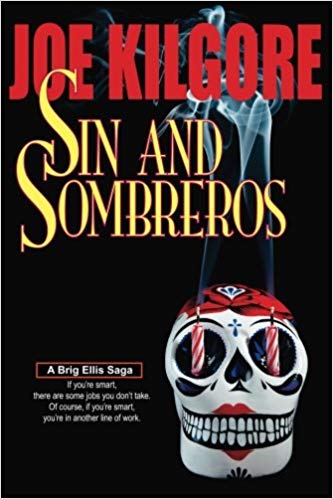
Synopsis
A favor for a friend puts San Diego private investigator Brig Ellis in contact with a real knockout. But the first time they meet, the specter of larceny hangs in the air like the stale scent of Al Capone's cigar. Before Ellis can decide to make a pass or make tracks, he is hired by the black sheep of a dysfunctional dynasty to retrieve the clan's daughter from apparent involvement with Zapatista rebels in Mexico. A tale of two cities ensues laden with hidden agendas, revelations, recriminations, murder, mayhem, and a final conflict that unfolds on the eight thousand foot cliffs of the Copper Canyon Railway. But perhaps it's not as final as it seems. SIN AND SOMBREROS marks the debut of Kilgore's contemporary gumshoe whose character traits are rooted firmly in the past. He'll be tilting at windmills and turning over trouble in a series of Brig Ellis sagas. Keep an eye out for the next one.
Site Menu
- Home
- Authors A - K
- Authors B
- Bernice Love Wiggins
- Bradley Sullivan
- Breakfield and Burkey
- Brenda Blair
- Brent Parrott
- Brian Carman
- Brian Sluga
- Brian Edkins
- Bronte Club
- Bill Palmer
- Bill Sanford
- Bill Thomas
- Bob Doerr
- Bobbie Lynn
- Bon Blossman
- Buzz Sculley
- B. B. Denson
- B. D. Edkins
- B. L. Blair
- B.W. Van Alstyne
- B Alan Bourgeois
- Balinda Cooper
- Barbara Frances
- Balinda Cooper (2)
- Blaise Ramsay
- Blake Allwood
- Becki Willis
- Bennett Easton
- Bessie David
- Beth A Freely
- Beth Howlett
- Branch Isole
- Beth Honeycutt
- Beth Anne Rauch
- Betty Willis
- Bruce A Bleakley
- Brenda Marie Smith
- Bianca Pensay Aba
- Brenda Berry
- Authors C
- Authors D
- Authors E
- Authors F
- Authors G
- Authors H
- Authors I
- Authors J
- Authors K
- Amy Bearce
- Augusta Jane Evans Wilson
- Allyre Bureau
- Authors B
- Pages
- Donations
- Awards Programs
- Book Listings
- A
- More Books
- A Rainbow of Thanks
- A Farmhouse in the Rain
- A Family & The Power of Intuition (Hard Cover)
- A Family & The Power of Intuition
- Aging Without Grace
- A Very Present Help
- A Thousand Stars
- A, B, & Cs of Author Partnering
- A Journey Around the Arab-Spring Revolutions: The Quest for freedom, dignity and democracy
- Awesome Footsteps: A Missionary’s Memoirs (volumen 3)
- Agla and Kevin
- AESOP
- After the Devil
- Book Club of Texas
- A Dead Tomato Plant and a Paycheck
- A Case of Strangulation by a Stranger
- A Leather Doll in a Vanilla World
- A Thousand Miles From Nowhere
- An Almost Very Scary Day
- A, B, & Cs of Author Partnering
- A Treasure in Irianna
- Austin Food Blogger Alliance Cookbook, The
- Apache Gold and Yaqui Silver
- A Vaquero of the Brush Country
- Aunt Ida's Niece (Captain of the Ship - Volume 2)
- Adventures with a Texas Naturalist
- A Picture Gallery
- Authors Revolution Workbook
- A Texas Gal Cooks
- Agatta
- Angels Among Us
- Army Rising
- Arthur Zarrs Amazing Art Car
- Asunder
- Aquasaurus
- America’s Covert Border War, The U told Story of the Nation’s Battle to Prevent Jihadist Infiltration
- An American in Scotland
- A Hand-Me-Down Heart: Texas General Cozy Cases
- More Books
- B
- More Books
- Big Spring Revisted
- Brave Bulls, The
- Built with Stones of Turquoise
- Blessing of Luna: Wolf gods #1
- Blonde Moxie
- Body of Torment
- Beneath It All: A Collection of Poems
- Billy
- Bunny in the Bluebonnets
- Big Mother 40
- Boxes For Beds
- BeakSpeak
- Bobby Jay
- Bobby Jay and Teacher's Desk
- Bobby Jay Gets an Ug
- Beatles, Books, Bombs, and Beyond
- Bobby Bear Learns to be a Cowboy
- Boys
- More Authors
- 50 Best Books on Texas, The
- Baseball in the Lone Star State
- Baylor County
- Burnet, Texas
- Beyond McCarron's Corner
- Ben Green Tales (4 Volume Set) Hardcover – 1974
- Barbed Wire
- Bitter Trail
- Bowie's Mine
- Black Jack: The Life and Times of John J. Pershing
- Ben Lilly Legend, The
- Bob More: Man and Bird Man
- Blind Lemon Jefferson: His Life, His Death, and His Legacy
- Bird-Witched
- Big Spring and Howard County
- Bye, Bye, Sweet Sammy
- More Books
- C
- More Books
- Cowboy Songs and Other Frontier Ballads
- Can't Build a Fence
- West Texas Tales
- 6 Central Texas Auto Tours
- Control Factor: The first book in the trilogy of the Control Factor Series (Volume 1)
- Chicken Scratch
- Christmas in The Sisters
- Chains Broken: Book 4, Divine Legacy Series
- Chasing Hope
- Conall
- Conall II
- Conall III
- Conall IV
- Comfort for Grieving Hearts
- Comfort Plans
- Constellation Crimes
- Circumstances of Childhood
- Cherubs 2
- Conned Conservatives and Led-on Liberals
- Corpus
- Cry for Rain: A Memoir
- Chicken Monkey to the Rescue
- Chasing Fairytales
- Casual Power
- Canyon Road
- Clean Slate
- Camp Verde: Texas Frontier Defense
- Carrollton
- Carthage
- Cast Them Dead
- Charro Days in Brownsville
- Charro Days in Brownsville (Postcards)
- Cherokee County
- Chicanos in Higher Education
- College Station
- Corsicana
- Color of Horses: A Scientific and Authoritative Identification of the Color of the Horse, The
- Clear Glass
- Campus Town
- Cowboys Quit, The
- Confederate General of the West: Henry Hopkins Sibley
- Cowhand: The True Story of a Working Cowboy
- Coronado's Children
- Cow People
- Christmas in The Sisters
- Chicken Scratch
- More Books
- D
- More Books
- Daily Journal
- Darling Girl
- Dallas Aviation
- Del Rio: Queen City of the Rio Grande
- Donna, Texas
- Dawn's Early Light, The
- Delta Balance
- Doll's House: An adaptation of Henrick Ibsen's work
- Down Mexico Way 1963
- Dregs Island
- Divine Legacy
- Divine Legacy Series: Hearts United
- Does This Sound Unusual?
- Dragonlady Trilogy
- Dragonlord Trilogy
- E
- Encyclopedia of Early Texas History: A Compendium of Texas Antiquity for the Inquisitive Mind
- Echoes From the Stars
- Every Man Dies, Not Every Man Lives
- Echo of Silence (The Silence Trilogy), The
- Éliphas Lévi and the Kabbalah - The Masonic and French Connection of the American Mystery
- Einstein's Compass a YA Time Traveler Adventure
- Extinguishing the Light
- Epilogue to Survival
- Ever-Deepening Hers
- Evriskon: Future Lost
- Evriskon: Earth Bound
- Effortless Research
- El nuevo amigo de MJ (Spanish Edition)
- Eyes of a Neighbor
- Entertaining Detours
- F
- For a Fish to Soar
- Forgotten Tales of Texas
- Fort Clark and Brackettville: Land of Heroes
- Fort Martin Scott
- Fall Dogs
- Far Canyon, The
- Fun at the Mike
- Flavor of Texas, The
- Flowers and Stone
- Famous Texas Ranchers
- Fearfully and Wonderfully Made: Biomechanics for the Performer
- First Tango in Paris
- Fiona Frost: Blood Dolls
- Fiona Frost: Murder at Foster Manor
- Fiona Frost: Shillingstone Witch
- Forgotten Boxes
- Forever Fall
- Fractured Wings
- Fable
- Forgotten
- Future Discovered
- Fly: An Empty Nester's Quest for the Holy Grail of Life, Love and Longevity
- Florence Flies Alone
- G
- Gunfights & Sites in Texas Ranger History
- Gainesville and Cooke County
- Galveston's the Elissa: The Tall Ship of Texas
- Georgetown
- Georgetown Now & Then
- Glen Rose Texas
- Goliad, Texs
- Good Old Boys, The
- Glen Aaron
- Gay Place, The
- Glow and Grow in the Grace of God
- Genny's Ballad
- Getting Him Off Completely
- Getting Him Off Finally
- Getting Him Off Quickly
- Getting Him Off Secretly
- Getting Him Off Sweetly
- Granny's Ozark's Treats
- Gift of War
- Ghost Dogs
- God Spoke and I Listened
- Heaven Held
- H
- More Books
- Heights of Deception
- Heart a visceral fantasy
- Him
- Heartbroken: Healing from the Loss of a Spouse
- Hamilton Troll and the Big Race
- Hamilton Troll and the Case of the Missing Home
- Hamilton Troll meets Chatterton Squirrel
- Hamilton Troll meets Dinosaurs
- Hamilton Troll meets Pink Light Sprite
- Hamilton Troll meets Rudy Rat
- Hamilton Troll meets Skeeter Skunk
- Hamilton Troll meets Starlit Troll
- Hamilton Troll meets Whitaker Owl
- Harmon General
- Her Guarded Desire
- His Revenge
- Heart of a Neighbor
- Hidden Creek
- Heart of Gold
- Hearts, Tears & the Journey of Life
- Hope After Grief
- His Perfect Love
- Home to McCarron's Corner
- Home Again
- Highland Park Woman, The
- Here Be Dragons!
- Haunted Granbury
- Historic Tales from the Texas Republic: A Glimpse of Texas Past
- Houston, Texas
- Houston, Texas (Postcards)
- Horse Conformation
- Horse Tales
- Horse Tradin'
- Hunting and Fishing in Texas
- Hill Country Chronicles
- Honor at Daybreak
- Hot Iron
- Home at Last
- Haunted Hacienda, The
- Historic Lubbock County
- Have You Seen My Egg?
- He Kills Me, He Kills Me Not
- Home Again: Starting Over
- Herman: Back To The Trees
- Keep Your Doors Locked
- More Books
- I
- In A Narrow Grave
- Incident Without Honor
- Interwoven: A Pioneer Chronicle
- I'm Crazy Great
- Inn the Spirit of Legends
- Inheritance Adventures
- Ice: the Way Within
- Inferno: The War Between
- It's Okay to be Different
- I Will Be the One
- Immortal Guardian
- Inner Look
- It's Too Windy!
- Identity Check
- Icicles to Moonbeams
- I'm His Little Girl
- I'm Her Little Boy
- I'm Her Little Girl
- Inn the Spirit of Competition
- Inn the Spirit of Trickery
- J
- K
- L
- More Books
- Lorraine Evelyn Mason
- Letters of Roy Bedichek
- Lyndon Baynes Johsnon: The Formative Years
- Looking with New Eyes: My Journey from Bondage to Freedom
- Light from Her Mirror
- Lost King
- Living on the Edge
- La pequeña luz blanca (Spanish Edition) Hardcover
- Life in a Box
- Lillie, A Motherless Child
- Leaders are Made Not Born
- Lexin's Quest
- Ledbetter Street
- Let the Little Birds Sin
- Light from Her Mirror
- Longhorns, The
- Love You Forever: Elizabeth's Story
- Love You Forever
- Lakota Betrayal, A Novel
- La Salle County
- Lyndon B. Johnson National Historical Park
- Lighthouses of Texas
- Longview
- Lost Fort Worth
- Luther, Joseph
- Last Trail Drive Through Downtown Dallas, The
- Lamp's Light
- Lily
- Looking after Lily
- Loaded South: A Taxi Memoir
- Living and Writing in West Texas
- Legends of Texas I
- Legends of Texas II
- Lilac Code, The
- More Books
- M
- 900 Miles on the Butterfield Trail
- Man Who Rode Midnight, The
- Many a River
- Mighty Stonewall
- Mustangs, The
- Mustangs and Cow Horses
- Marble Falls
- Memoirs on Mime for All Time: The Emergence of Physical Theatre in the 21st Century
- Mime and Pantomime in the Twentieth Century: History, Theory, and Techniques
- Moth to the Flame, The
- Motive, Means and Opportunity
- Mirror, Mirror on Her Wall
- MeMom & Friends Gardening Tips Coloring Book
- Mail Order Groom
- Molly Warner: School Reporter
- Murder For A Moment
- Murder Is A Family Affair
- My Dream, America
- MJ's New Friend
- My GRL
- Meem's Little World
- Meem's Little World 2
- Meem's Little World 3
- My Journey Into The Oncoming Holocaust
- Moscow Airlift
- Master Stinky Dances
- Moon Thief
- Market Intelligence ... The Original Work
- Modicum
- Murder and Madness, No. 3 In the Mavis Davis Mystery Series
- Murdered Judges of the 20th Century
- My Daddy Loves Me
- McCarron's Corner
- Murder at the Stroke of Midnight
- Superstitions and Apparitions
- Murder Worth a Thousand Words
- Bye, Buy Baby
- N
- NAVFAC: The Final Tour of Duty
- Nine Deadly Lives
- Not Just My Poetry...It's Your Life, Too
- Naturally His
- Naughtiness is Contagious
- Not Quite Healed: 40 Truths for Male Survivors of Childhood Sexual Abuse
- New Horizons
- No More Stinkbugs!
- No Time To Kill: True Stories of an Arizona Bounty Hunter
- Natural Law
- Nsa Unzipped and Exposed
- O
- O'Neal, John William "Bill"
- Open Spaces
- O Doce Sonho da Vida (The Sweet Dream of Life): Portuguese Edition
- Overland on the Hippie Trail
- Out Here in the Darkness
- On a Pedestal
- Onions Hitting the High Notes
- OPERATION A.N.G.E.L.
- Our Justice
- Overland on the Hippie Trail1
- One Small Victory
- Ok, God, Let's Start from Here
- On a Lark
- P
- More Books
- Path of the Guiding Light
- Port Isabel
- Progreso
- Past Author Page
- Pass of the North: Four Centuries on the Rio Grande
- Passion of Dellie O'Barr, The
- Patients the Paramedic Pup
- Pecos Crossing
- Ploughshares into Swords: Josiah Gorgas and Confederate Ordnance
- Paradise Discovered
- Paradise Explored
- Peregrina and Her Beloved
- Perennials
- Prince Hall Freemasonry in the Lone Star State
- Plain Roots
- Poetic Nympho
- Q
- R
- Ramblings of an Old Poot
- More Books
- Random Sample: An Uncertain Suicide
- Random Sample: The Improbable .38
- Random Sample: Something Else In Commmon
- Railroading in Ellis County
- Ranger
- Roanoke
- Romancing the Gold
- Right from Wrong
- Ransom's Fire
- Red Suspenders (Paradise Book 1)
- Redemption of Dr. Faust, The
- Reflections of Carolina
- Righting of the Augustus Marie, The
- Return to Sandy Creek
- Ranch Verses
- Roll Me Up and Smoke Me When I Die
- Retribution: Records of the Argos
- Rose by Any Other Name
- S
- More Books
- Stein House, A German Family Saga
- Stolen Obsession
- Stolen Options
- Sally the Travelin' Artist
- Sally the Travelin' Saddle
- Sally Travels Parade Style
- Short Stories by Texas Students
- Sammie & Budgie
- Simon Adventures Boxed Set
- Sue's Sunrise Surprise
- Suggestion of Death
- Spent Identity
- Sitting on Top of the World
- Superstitions and Apparitions
- More Books
- Sassywood Man and Other Folklores
- Secret Love of Nell Gwyn, The
- Shadows After the Rain
- Someplace Close to Paradise
- Sweet Dream of Life (Il Sogno Dolce di Vita), The
- Symphony of Silence (The Silence Trilogy), The
- Sironia, Texas
- Shadows on the Land: An Anthology of Texas Historical Marker Stories
- Sideshow at Honey Creek
- Sophie and Scottie's Adventures of Sweet Tooth Rock
- Stipulations and Complications
- Seasons of Change: Grace Restored Series
- Splintered
- Spring Shadows
- Summer Secrets
- Sophie and Scottie's Adventures of Something's Fishy
- Plain Roots
- More Books
- Search For Help
- Sophie and Scottie's Adventures of the Monarch Mystery (Adventures of Sophie and Scottie)
- Secondary Worlds
- Sand: the Way Out
- Stone: the Way In
- Sea: the Cold Below
- Sky: the Flight Above
- Sanctuary Found
- Secrets of The Heart
- SEARCH FOR AQUASAURUS
- Spirituality in the 21st Century
- Saying Goodbye: Facing the Loss of a Loved One
- Shattered: Surviving the Loss of a Child
- Shadow's Justice
- Sin And Sombreros
- Seeing Gail Again
- Sin, Secrets, and Salvation
- Strike Price, Lynn Dayton Thriller #2
- Surrender: A Love Letter to My Daughter
- Scoochie-Scoochie Nite-Nite
- Sunshine and Secrets
- San Antonio's Historic Hotels
- Santa Claus Bank Robbery, The
- San Augstine County
- Shackelford County
- Southern Pacific Railroad in Eastern Texas
- Some More Horse Tradin'
- Spyglass
- Stream of Light
- Shadow of a Star
- Six Bits a Day (Hewey Calloway)
- Slaughter
- Southwest: South or West?, The
- Some Dreams Really Do Come True
- Stephen
- Sarah's Flag for Texas
- Stalking Season
- Shadows
- Sitting on a Fortune
- Stipulations and Complications
- More Books
- T
- More Books
- More Books
- More Books
- More Books
- The Revelator
- The Sunflower Killer
- Trapped!
- Teen Grief
- The Best of Eve: Recipes From Around The World
- The War Has Ended but the Memory Lingers On
- The Big Inch
- The Creation of Kaitlyn Jones #1
- The Painting
- The Painting 2
- Taunting Tara (Volume 1)
- Teaching Lessons
- Teaching Tara (Volume 2)
- The Blunder
- The Call: Faithful Endeavors
- The Case of Section 950
- The Case of the Frozen Horse
- The Case of the Hobo's Son
- The Case of the Pier of Wishes
- The Contract: Between Heaven and Earth
- The Keeper
- The Keeper II
- The Jesus Ring
- The Music Box
- The Saltwater Poet
- The Covid Kid
- Texas Etiquette
- Tapestry of Pas De Deux, The
- Trinity River Watershed, The
- Texas Auto Trails - The Northeast
- Texas Auto Trails - The South
- Texas Auto Trails - The Southeast
- The Storm
- The Dry
- The Durhams of Fairfield: An African American Genealogy
- The Machine Gunner's Creed: Ukraine to Karachi, 1918-1923
- Three Men in Texas
- The Storm
- More Books
- More Books
- More Books
- The Enigma Factor
- The Enigma Rising
- The Enigma Ignite
- The Enigma Wraith
- The Enigma Stolen
- The Enigma Always
- The Enigma Gamers
- The Enigma Broker
- The Enigma Dragon - A CATS Tale
- The Enigma Source
- That Can't Be Right!
- The Call to Duty: The Holy Flame Trilogy
- The Mysterious Mr. Blackstone
- The Evriskon Saga
- The Steeping Season
- The Ticking Hand, Borderland Tales III
- More Books
- The Little White Light
- The Safecracker
- Til Death Do Us Part
- Timeless Tales: Rhymes From the Heart
- Two Shorts and a Snort
- The Second Law, Lynn Dayton Thriller #3
- Texas Tales, Stories That Shaped a Landscape and a People
- The A to Z Book of Birds: An ABC for Young Bird Lovers
- The A to Z Book of Weeds and Other Useful Plants
- The A to Z Book of Wildflowers
- The Athletic Revolution - Hardcover
- The Athletic Revolution - Paperback
- The Doctor's Wife
- The Little Town with the Big Heart (Volume 2)
- The Open Portal
- The Treasure Hunt Club
- The ABCs to Ranching
- The Adventures of Runt and Arnold
- The Gifted Ones
- The Gifted Ones The Fairytale
- The Lonely Chair
- The Long Road Back
- The Pact with the Devil
- The Perfect Pro Football Coach
- Two Generations-Visions of Life, Volume 1
- Two Generations-Visions of life, volume 2
- The World's First Tooth Fairy
- The Chronicles of the Syrian Revolution
- Texas Style Justice
- That Beautiful Season
- The Meteoric Rise of Simon Burchwood
- The Sheldra Series
- The Spectacular Simon Burchwood
- The Sweet Scent of Murder, No. 2 in the Mavis Davis Mystery Series
- There Abideth Hope
- Through the Eyes of a Dove
- To Squeeze a Prairie Dog
- The Janus Witch
- the Spirit of Trickery
- The Sword: A Murder Mystery
- Tangible Spirits
- The Girl from Her Mirror
- The Lilac Code
- More Books
- Thousand Miles of Mustangin'
- The Village Horse Doctor: West of the Pecos
- Tree of Justice
- Texas Baseball: A Lone Star Diamond History from Town Teams to the Big Leagues
- The Smiling Country
- Time It Never Rained, The
- Their Tattered Flags: The Epic of the Confederacy (Williams-Ford Texas A&M University Military History Series)
- Traveler's Tale
- Tides of Impossibility
- Tides of Impossibility Vol 1
- Texas: A Novel
- Tales of Old Time Texas
- Tell You a Tale
- The Convict and the Rose
- The Unfading Lands
- Three Complete Mysteries: Greenwich Killing Time / A Case of Lone Star / When the Cat's Away
- Texas Quest
- More Books
- The Eyes of the Doe
- The Sweet Adventures of Henry P. Twist
- Texas A&M University Kingsville
- The Open Portal
- Texas Boomtowns: A History of Blood and Oil
- Texas Citrus Fiesta
- Texas City
- Texas Depression-era Desperadoes
- Texas High School Football Dynasties
- Texas Gulf Coast Stories
- The Texas League Baseball Almanac
- Texas Oil and Gas
- The Texas Rangers
- Texas Sesquicentennial Wagon Train
- Texas Hill Country Wineries
- The Condom and Other Stories
- The Glider
- The Noxhelm Murders
- The R.Z.A. Chronicles Omnibus
- The McCarron's Destiny
- The McCarron's Daughter
- The Aquamarine Surfboard
- The Angel of Goliad
- The Girl from Her Mirror
- More Books
- U
- V
- W
- More Books
- What Every (New) Author Should Know: A Survey of American Readers
- West Texas Cattle Kingdom
- White Rock Lake
- Wineslinger Chronicles: Texas on the Vine
- Waco, Texas A Postcard Journey
- Weatherford: Historic Walking Tours
- Wellborn before Television
- Wild Cow Tales
- Were You In Ranger
- Windows All Around
- Window's Pane
- Wolf and the Buffalo, The
- White Horse, Red Horse, Black Horse, Dead Horse
- Wind of Destiny (Captain of the Ship)
- William C Pool
- Wildflower Wedding: With a Killer Reception
- When the Stars Fall
- X
- Y
- Z
- A
- Membership
- TAIH Store
- Video List
- General Videos
- Board Meetings
- TAIH TV
- Magazine
- Contests
- Student Programs
- Lone Star Awards
- Authors L - Z
- L
- Lydia Schrandt and Biju Sukumaran
- Lelina Durrette
- Leonie Waithman
- Lisa A Contreras
- Lori Freeland
- L
- More Authors
- L. A. Starks
- L E Kinzie
- L. M. Mann
- Lamar, Mirabeau Buonaparte
- Larry Farmer
- LaRee Bryant
- Larry Brill
- Larry D Thompson
- Larry Landgraf
- Larry J Horn
- Larry Morris
- Laura P. Angaroni
- Laura Patterson
- Laura Patterson
- Laura Eckroat
- Laural Harris
- Lauralee Harris
- Lawrence, Francis Lee
- Lea Ann Vandygriff
- Leonard Reese
- Leslie Tourish
- Lauricia Matuska
- Linda Yezak
- Linda A. W. King
- Linda Brooks Davis
- Linda Hanna Lloyd
- Linda Lattimore
- Linda LaRoque
- Linda Pirtle
- Linda Broday
- Lindsey Backen
- Lois Farfel Stark
- Logos Peregrin
- LiFong Woo (Ph.D.)
- M
- Meena Julapalli
- Micole Williams
- M
- More Authors
- More Authors
- More Authors (2)
- Mary Bryan Stafford
- Matthew White
- Melanie Harper
- Melineh Patatanian
- Melineh Petrosian
- Mel Barborak
- Melanie Bragg
- Merele Rosenbloom
- Micahel Willingham
- Michael J Farlow
- Michael Earney
- Michael Lanning
- Michael S Moore
- Mike Thompson
- Milli Mills
- Michael Smith
- Michael J. Hawron
- Michael Serrapica
- Michael D Thompson
- Michael Lee Lanning
- Michele Packard
- Mike Ellerkamp
- Mike Cox
- Mike S Clifton
- Millionaire Mo
- Missy Jane
- Milton Magness
- Misty Boyd
- Mitzi Pool Bridges
- Mollhausen, Heinrich Balduin
- Montgomery, Vaida Stewart
- Montgomery, Whitney Maxwell
- Mossiker, Frances Sanger
- Murphey, Joseph Colin
- Myra Hargrave McIlvain
- M Ward Leon
- M Ward Leon
- McMurtry, Larry Jeff
- McPherson, Lydia Starr
- McCaleb, Walter Flavius
- McCarty, John Lawton
- McCoy, Horace Stanley
- McDougal, Steph
- McGiffin, Lewis Lee Shaffer
- McGiffin, Philo Norton
- McGinnis, John Hathaway
- McLane, Hiram H
- McLean, Malcom Dallas
- McLemore, Atkins Jeferson
- McMurray, DeWitt
- Mack Little
- Mae Edwards
- Maggie Foster
- Major, Mabel
- Mark Guillerman
- Marc Liebman
- Mark W Stoub
- Marieta Hutchison
- Marian Hays
- Marcus Weems
- Marriner, Harry Lee
- Marva Mason
- Marlene Bell
- Marla Dean
- Matthaei, Clara
- Marsha R West
- Marvin Tyson
- Marvin Michael O'Bryant
- Mary Esparza-Vela
- Matthews, Sallie Ann Reynonds
- Karl May
- Mary Ann Faremouth
- Maryann Miller
- Mary L Hamilton
- Melvin E Edwards
- N
- O
- P
- P
- More Authors
- P. G. Shriver
- P. M. Franks
- Pamela Martin
- Pam Kelly
- Parker, Clara May
- Chuck Parsons
- Pat McGrath-Avery
- Pathfinder's Club
- Patterson, Norma
- Pattullo, George R
- Patty York Raymond
- Patricia Ann Brill, PhD
- Patricia Taylor Wells
- Patrick Allen Wright
- Patty Wiseman
- Paul and Merrill Bonarrigo
- Payne, Leonidas Warren Jr
- Peggy Tidwell
- Penny Richards
- Peter Hofmann DDS
- Peggy Marceaux
- Phebe Phillips
- Philip Derrick
- Pennell, Eagle
- Peter Chika
- Perry, George Sessions
- Pickens, Lucy Petway Holcombie
- Pike, Albert
- Pillot, Joseph Eugene
- Pinckney, Susanna Shubrick Hayne
- Poet Laureate
- Poetry Society of Texas
- Polley, Joseph Benjamin
- Porter, Katherine Anne
- Porter, William Sydney
- Postl, Carl Anton
- Potter, Fannie Cora Bellows
- Potter, Reuben Marmaduke
- Primer, Sylvester
- R
- Randi Whitney
- Rob Saucedo
- c
- Reyes Ramirez
- Ricki Lee McKenna
- R
- More Authors
- Rose Garcia
- Robenalt, Jeffery
- Robertson, Lexie Dean
- Robert Pietzsch
- Robert B. Sloan
- Robinson, Thomas C
- Roddenberry, Eugene Wesley
- Rogers, Alfred
- Rolling Stone
- Rollins, Hyder Edward
- Romayne Troost Kazmer
- Romberg, Johannels Christilieb Nathanael
- Ronald H Keyser
- Ronald Henson
- Rose, Victor Marion
- Rosie J. Pova
- Roy Clinton
- Roger Leslie
- Robert J DeLuca
- Roxanne Gail Hodge
- Rhonda Brinkman
- Rowe, James Nicholas
- Russell, David Riley
- R. S. Dabney
- Ransom, James Burchett
- Ramirez, Sara Estela
- Ramona Siddoway
- Randall Reneau
- Ratchford, Fannie Elizabeth
- Raul Herrera
- Raunick, Selma Marie Metzenthin
- Rayn Rose
- Reba Kindred
- Rebecca Adler
- Regina Jackson
- Red O'Laughlin
- Renne Siewers
- Rebecca Nietert
- Reid, Thomas Mayne
- Richard Rieman
- Rick Wilcox
- Rita Louise Wilcox
- Rita O Holcomb
- Rivera, Tomas
- Robert Lovelle Rooks
- S
- Sharon Fant
- Shalonda McFarland
- Sharde Redmon
- Shirlena Wright
- S
- Stephanie Strickland
- Saba Husain
- More Authors
- More Authors
- Shannon L. Mokry
- Sheryl Grace
- Shequera Donshell
- Stan Corvin, Jr.
- Stapp, William Preston
- Stephanie Cameron
- Stephen Dangerfield Dunn
- Steve Reedy
- Stieger, Harry Peyton
- Stilwell, Arthur Edward
- Stilwell, Hart
- Stone, Jack R
- Sweet, Alexander Edwin
- Swisher, Bella French
- Seele, Friedrich Hermann
- Simmons, James Wright
- Simond, Ada Marie DeBlanc
- Simpson, Friench
- Simpson, Harold Brown
- Sims, Mary Jane
- Siringo, Charles Angelo
- Sobieski, Carol O'Brien
- Sonnichsen, Charles Leland
- Shondra Quarles
- Southwest Review
- Sue Hawley
- Susan Count
- Suanne Schafer
- Sun Wren Richards
- Susan P Baker
- Susan Stanley Broesche
- Susan Maluschka
- Suzanne Gene Courtney
- Sybrina Durant
- Sylvia Sanchez Garza
- S Marriott Cook
- Smithwick, Noah
- Sandra Fox Murphy
- Sandra BonSell
- Sandra Clarke
- Sandra Lee Cleary
- Sandy Lawrence
- Sandra Walters
- Sandra Rhea
- Sanford, Annette
- Sanford, Winifred Balch Mahon
- Sarah Swindell
- Sarah Coupland
- Saunders, George Washington
- Scarberry, Alma Sioux
- Scarborough, Emily Dorothy
- Schrecengost, Tammy Burrow
- Sharon Jenkins
- Shanalee Sharboneau
- Sharon Brown Keith
- Sherry Hall
- Skaaren, Warren Edward
- Steve Friedman
- Scott Bell
- Shelly Harris
- Sjolander, John Peter
- Scott Semegran
- Shamrock Shelley Cleaver
- Shanna Spence
- Shelly Lee
- Sheri Wall
- Sherry Maysonave
- Sharon K. Middleton
- Sharon K Connell
- Sidney Lanier
- T
- Tim Frankovich
- Temera Bell
- T
- More Authors
- Trent Walters
- Tyesha Davis
- Tracy Cass
- T.J. DuBois
- T.J. Kelly
- Tamara H. Hartl
- Tanya Sands
- Tarif Youssef-Agha
- Taylor, Bride Neill
- Teal L. Gray
- Teresa Trent
- Teri Metcalf
- Terrance Denuszek
- Terry C Markoff
- Terry Braddock
- Terry H watkins
- Terry Hiner
- Terry Gene
- Terri Hiner
- Texas A&M University Press
- Texas Authors Institute of History, Inc.
- Texas Institute of Letters
- Texas Magazine, Dallas
- Texas Magazine, Houston
- Texas Quarterly
- Texas Studies in Literature and Language
- Texas Writers' Project
- Texas-Mexican Fiction
- Tierashia Adair
- Tiffany Obeng
- Thomas Fletcher Grooms
- Thomas J Nichols
- Thomason, John William, Jr
- Thompason, Thomas
- Thompson, Stith
- Tranchese, Carmelo Antonio
- Trenckmann, William Andreas
- Tricia Draper
- Tinkle, Julten Lon
- Todd Bensman
- Tolbert, Francis
- Tolson, Melvin Beaunorus
- Torbett, John Walter, Sr
- Tom Blanton
- U
- V
- Authors L
- Authors M
- Authors N
- Authors O
- Authors P
- Authors Q
- Authors R
- Authors S
- Authors T
- Authors U
- Authors V
- Authors W
- William Fields
- William Herschel Bruce
- William D Barney
- Walter R. Adams
- William Lee Brammer
- William Cowper Brann
- William Thomas Green Weaver
- W. R. Klemm
- Walkter Prescott Webb
- W. L. Phillips
- Wendy Sura Thomson
- William T Harper
- William A Burgdorf, Ed D
- Winter Lawrence
- William Daniel Wood
- William Bartlett
- Warren Landrum
- Authors X
- Authors Y
- Authors Z
- L
- A
- Arthur Tracy Lee
- Adah Isaacs Menken
- Aline Triplette Michaelis
- Albert Mitchell
- Anna Molly
- Abraham Moreno
- Angel Ponyboy Garcia
- Adrienne Renick
- Anne Redfields
- Anson Jones Press
- Apple Gidley
- April Nunn Coker
- Aralyn Hughes
- Arie Brish
- Art Costello
- Alfred W Arrington
- Aunt Eeebs and Sprout
- Augusta Wright
- A. William Benitez
- Angélique Jamail
- Aaron Ward
- Aaron M Zook, Jr
- Abra Stevens
- Abby Goldsmith
- Andy Adams
- Addison Brae
- Adrienne LaCava
- Anthony Blankenship
- Antoinette Power Houston Bringhurst
- Amy Campbell
- Amy Winfield
- Amy Epstein Brazda
- Amber Manning
- Ashley Knight
- Allan C. Kimball
- Alice Brock
- Alexia Bartholomew
- Alan Steelman
- Alan C Elliott
- Alan Brenham
- Andrea Tumblin
- Andrew Fairchild
- Andrew Monroe
- Andrews, Jessie
- Anita Dickason
- Ann C.K. Nickell
- Ann Noble
- Ann Swann
- Anna Bauereis
- Anna Church
- Annabeth Penelope Gambrell
- Anne Redelfs
- Anne W Greene
- Annette Geroy