Search

BlogRead the Latest News


Texas Authors Institute of History

A Unique Museum that saves history, inspires the future, depth and gives to the present..

SKAAREN, WARREN EDWARD (1946–1990). Warren Edward Skaaren, Austin screenwriter and film executive, was born on March 9, 1946, in Rochester, Minnesota, where he attended public school. An excellent student, he earned the badge of Eagle Scout and in 1964 won the state "Radio Speaking Championship" while still in high school. From 1965 to 1967 he attended Rochester Community College, where he served as student body president and received the "Champion Citizen Award." In 1967 Skaaren transferred to Rice University in Houston. There he edited the Hanszen College newsletter, was elected president of the student body, and received the Hugh Cameron Award. He graduated from Rice in 1969 with a bachelor of arts degree. His primary talents included metal sculpting, poetry, and dramatics. After college he married Helen Griffin. From 1969 to 1971 he worked for Governor Preston Smith, first as chief Human Resources Analyst and then as Urban Development Coordinator. It was in the latter job that he conceived of the idea of establishing a Texas Film Commission. He served as the commission's first director from 1971 to 1974. During his tenure he set up the commission's daily operations and its long-range goals and published its first annual production manual. In 1974 Skaaren left the Film Commission and became chairman of FPS, Incorporated, of Dallas, a film and television studio and production service. For more that a decade FPS provided equipment, personnel, and production services for the CBS-TV series "Dallas," as well as for sixty other features, including the Oscar-winning film "Tender Mercies." During the 1970s Skaaren wrote and directed two PBS documentaries: "Fireworks," starring George Plimpton, and "A Special Place," a history of the efforts to preserve the San Antonio River and build its famous riverwalk. He also played a key role in a group of friends' endeavor, by suggesting they rename their film Leatherface and call it The Texas Chainsaw Massacre. During the 1970s he also traveled to India and Tibet doing research for his screenplay Of East and West.

In the early 1980s Skaaren wrote and directed the featurelength documentary film Breakaway, about a modern-day Thoreau living in the Brook Mountains in Alaska. In 1984 he cowrote Fire With Fire (1985), a feature film for Paramount Pictures. In 1985 he was associate producer and uncredited screenwriter on the blockbuster film Topgun (1986) starring Tom Cruise, for Paramount Pictures. This was followed in rapid succession by Beetlejuice (1987) for Warner Brothers, Beverly Hills Cop II (1988) for Paramount Pictures, and Batman (1989) for Warner Brothers. In addition to these films he wrote numerous unproduced screenplays, including Flawless (1986) for Jane Fonda, and The Crimson Eagle (1988) for Michael Douglas. In addition to his film interests Skaaren was a popular speaker and lecturer and avid environmentalist. He also supported various civic and cultural organizations, including the Travis County Foster Parents Association, the Deborah Hay Dance Company, and the East-West Center of Austin. Warren Skaaren died in Austin, on December 28, 1990.

BIBLIOGRAPHY: 

Austin American-Statesman, December 30, 1990. Austin Chronicle, August 11, 1989. Chicago Tribune, March 6, 1990. Texas Monthly, September, 1989.

Linda Vance


Citation

The following, adapted from the Chicago Manual of Style, 15th edition, is the preferred citation for this article.

William E. Bard, "ADAMS, WALTER R.," Handbook of Texas Online (http://www.tshaonline.org/handbook/online/articles/fad08), accessed March 19, 2015. Uploaded on June 9, 2010. Published by the Texas State Historical Association.


CM Bratton

Buy Book

$8.99


Points to Purchase:90
Points Earned:8
Bonus Points Earned:0

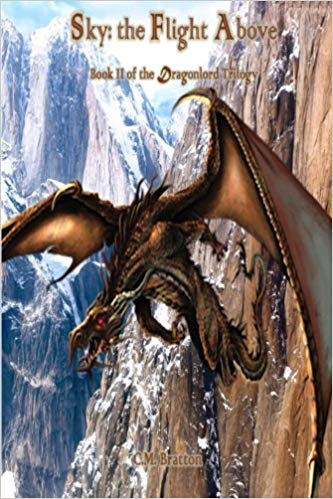
Twenty years have passed since Rothsarien's agonizing loss. He has spent the intervening time fueling his hatred and stoking his rage... Across the sea on a guarded continent, the young boy Alari grows into a man, gaining the title of Dragonlord along the way. Yet he suffers from a mysterious illness that leeches his strength and hurts those around him. When Alari's sickness permanently damages the daughter of one the family allies, he must go forth and hunt two dragons in recompense. At the same time, Rothsarien travels forth in search of the ancient enemies of his kind. Alari and Rothsarien head invitably towards each other, setting the stage for a battle neither one can prepare for... yet neither one can win...

Kelton, Elmer

Author: Elmer Kelton
Publisher: Texas Christian University Press
Retail:
 Varies
ISBN: 978-0875653716
Copyright: September 5, 2008
Pages: 374

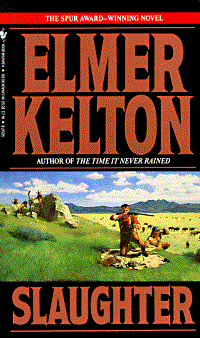
In the 1870s, buffalo hunters moved onto the High Plains of Texas. The Plains Indians watched hunters slaughter the animals that gave them shelter and clothing, food and weapons. The battles at and near the ruins of a trading fort, Adobe Walls, became symbolic of the struggles between hunters and the Comanche.

In this aptly titled novel, Texas novelist Elmer Kelton shows his uncanny ability to present both sides of a clash between cultures. With a firm grasp of Comanche life, Kelton presents The People as very human and very threatened. Equally clear is the picture of Anglos found on the high plains in those days—Jeff Layne, a Confederate veteran and now a fugitive; Nigel Smithwick, an English “second son” and gambler, Arletta, the lone woman among these men (one woman was at Adobe Walls).


Editorial Reviews

From Publishers Weekly

The title of this absorbing new novel by the author of Honor at Daybreak refers to the extermination of the buffalo, which once roamed the American prairies in herds so vast that they covered miles of territory like carpets. The creature's days are numbered as the book opens, with the Civil War ended and the country again focused on Manifest Destiny. Thrown from a train in Kansas by irate victims of his prowess with cards, English gambler Nigel Smithwick is saved from death in the desert by former Confederate soldier Jeff Layne. The pair team up as buffalo hunters, and inevitably they clash with the Comanche Indians, whose traditional way of life is threatened by white hunters's mass killing. Kelton deftly handles both sides of the conflict, displaying a more-than-passing knowledge of Native American culture and eloquently capturing the post-Civil War tension between erstwhile northerners and southerners now making new lives in the West. Well written and fast-paced, this powerful, moving novel proceeds inexorably toward the extinction of the great herds and of the indigenous peoples' way of life. It will attract readers who enjoyed the epic sweep of such grand western sagas as Larry McMurtry's Lonesome Dove and Harry Combs's Brules.
Copyright 1992 Reed Business Information, Inc. --This text refers to an out of print or unavailable edition of this title.
 

Author: Elmer Kelton
Publisher: Domain
Retail:
 Varies
ISBN: 978-0553565478
Copyright: February 1, 1994
Pages: 224


SMITHWICK, NOAH (1808–1899). Noah Smithwick, pioneer blacksmith, miller, and memoirist, son of Edward Smithwick, was born on January 1, 1808, in Martin County, North Carolina. The family moved to Robertson County, Tennessee, in 1814 where Noah received his education. Hearing glowing reports about Texas, nineteen-year-old Noah left his blacksmith job in Hopkinsville, Christian County, Kentucky, in 1827 and traveled by flatboat to New Orleans and schooner to Matagorda Bay. He worked as an itinerant smith before settling in San Felipe. On July 9, 1830, he applied for a league of land in Stephen F. Austin's colony, saying he had immigrated from Tennessee in 1827, was twenty-two years old, and a gunsmith, but he sold his headright before locating it. A friend, Hiram Friley from Gonzales, sought refuge in San Felipe after killing the alcalde. San Felipe authorities ordered him chained with leg irons, but Smithwick provided a file and a gun so he might escape. Tracked down, Friley was shot, and Smithwick's gun implicated him. The authorities tried him, declared him "a bad citizen," and on December 7, 1830, banished him from Austin's colony and Texas, providing an escort to the Sabine.

Smithwick returned to Matagorda in the fall of 1835, after four years in the Redlands of East Texas and Louisiana. He arrived at Gonzales the day after the battle and remained to repair guns. Joining the volunteers marching towards Bexar, Smithwick took part in the battle of Concepción, but like others discouraged by the indecisive command and without winter clothing, he abandoned the siege and went to Bastrop, where he had friends. In January 1836 he joined Capt. John Jackson Tumlinson, Jr.,'s newly formed ranger company to defend the Bastrop area from roving bands of Indians. During the Runaway Scrape Bastrop residents fled eastward, while Smithwick and others prepared to guard the river crossing and herd cattle eastward. They gradually retreated southeastward searching for the army, and arrived at San Jacinto after the battle. In May Gen. Thomas J. Rusk ordered gunsmiths to follow the Texas army from the battleground to Victoria. Smithwick did not pursue the Mexican army south of the Rio Grande. Smithwick returned to Bastrop to work as a smith and serve in the volunteer ranger corps from the fall of 1836 through 1838. Understanding Spanish, he occasionally served as interpreter-agent with Plains Indians seeking treaties and trading posts.

In 1839 Smithwick married Thurza N. Blakey, the daughter of widow Nancy Blakey and the widow of Richard Duty, who had lived in the Bastrop community since 1832. They settled on her late husband's property in Webber's Prairie in southeastern Travis County; by 1850 they moved to Brushy Creek in Williamson County, where Smithwick ran livestock. Unable to earn money in the pastoral setting, in the early 1850s Smithwick applied for a job in Burnet County as armorer at Fort Croghan (present Burnet), where he worked for awhile, perhaps until it closed in 1853. That year he paid $5,000 for the nearby saw and grist mill built by theMormons in 1850. He and his nephew and partner, John R. Hubbard, sold their interest in 1857–58. Smithwick began a new mill on 320 acres he bought ten miles east of Marble Falls in the Hickory Creek settlement. A Unionist in sympathy in 1861, Smithwick received threats and decided to abandon Texas. He sold his property and left his nephew at the mill. Secessionists later murdered Hubbard and threw his body into a waterhole. Smithwick and a number of friends left Burnet County on April 14, 1861, in wagons for southern California. By 1870 he and his wife and four children, ages 19–29, were living in Kern County, formerly part of Tulare County. During the last two years of his life, he joined the Texas State Historical Association and contributed an article to the Quarterly (vol II, 174–76, October 1898). He gradually lost his eyesight but dictated his memoirs to his daughter, Mrs. Anna (Nanna) Smithwick Donaldson. After his death in Santa Ana, California, on October 21, 1899, she polished the manuscript and had it published by Karl H. P. N. Gammelqv in Austin, Texas, in 1900 as The Evolution of a State, or Recollections of Old Texas Days.

BIBLIOGRAPHY: 

Eugene C. Barker, ed., "Minutes of the Ayuntamiento of San Felipe de Austin, 1828–1832," 12 parts, Southwestern Historical Quarterly 21–24 (January 1918-October 1920). Darrell Debo, Burnet County History (2 vols., Burnet, Texas: Eakin, 1979). Kenneth Kesselus, History of Bastrop County, Texas, Before Statehood (Austin: Jenkins, 1986). Noah Smithwick, The Evolution of a State, or Recollections of Old Texas Days (Austin: Gammel, 1900; rpt., Austin: University of Texas Press, 1983). Gifford E. White, 1830 Citizens of Texas (Austin: Eakin, 1983). Gifford E. White, ed., The 1840 Census of the Republic of Texas (Austin: Pemberton Press, 1966; 2d ed., Vol. 2 of 1840 Citizens of Texas, Austin, 1984).

Margaret Swett Henson


Citation

The following, adapted from the Chicago Manual of Style, 15th edition, is the preferred citation for this article.

William E. Bard, "ADAMS, WALTER R.," Handbook of Texas Online (http://www.tshaonline.org/handbook/online/articles/fad08), accessed March 19, 2015. Uploaded on June 9, 2010. Published by the Texas State Historical Association.


Site Menu