Search

BlogRead the Latest News


Texas Authors Institute of History

A Unique Museum that saves history, inspires the future, depth and gives to the present..

TEXAS MAGAZINE, HOUSTON. A third Texas Magazine, published in Houston in October 1909 with Frank Eberle as editor and Charles A. Newning as publisher, was a business and land development publication. Harry Van Demarkqv succeeded Eberle as editor in May 1911. Although fiction, serials, poems, and articles of general interest were used, editorial interest was in the opening of undeveloped regions of Texas to farming. Articles on good roads, biographies of prominent Texas businessmen, and feature stories of growing towns made up the main content; advertisements were by Texas banks and real estate developers. Numerous photographs of cities, towns, public buildings, and homes, printed on hard, slick paper, depict in detail the Texas of the early 1900s. Poetry by John P. Sjolander and Judd Mortimer Lewis, as well as the writings of Katie L. Daffan continued to appear. Less and less advertising appeared in the magazine; the last issue was in August 1913.

BIBLIOGRAPHY: 

Imogene Bentley Dickey, Early Literary Magazines of Texas (Austin: Steck-Vaughn, 1970). Quarterly of the Texas State Historical Association, Notes and Fragments, July 1897. Southwestern Historical Quarterly, Book Reviews and Notices, April 1912, April 1913.


Citation


The following, adapted from the Chicago Manual of Style, 15th edition, is the preferred citation for this article.

William E. Bard, "ADAMS, WALTER R.," Handbook of Texas Online (http://www.tshaonline.org/handbook/online/articles/fad08), accessed March 19, 2015. Uploaded on June 9, 2010. Published by the Texas State Historical Association.


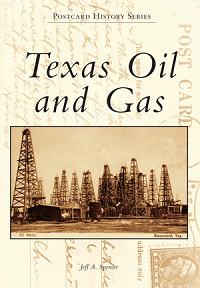
Author: Jeff A. Spencer
Publisher: The History Press
Retail:
 $21.99
ISBN: 978-1467130219
Copyright: September 2013
Pages:
 128

Texas Oil and Gas documents in postcards the rapid growth of the Texas petroleum industry from its beginnings near Corsicana in the 1890s through the next several decades of oil booms throughout the state. The young 20th century opened with the Lucas Gusher at Spindletop in 1901. Thousands rushed from the oilfields of Pennsylvania, Ohio, and West Virginia to find work and riches. Continued drilling success along the Texas Gulf Coast transformed Houston into a major city and the Beaumont area into a major petrochemical center. Through the 1910s and 1920s, oil booms occurred in North Texas, the Panhandle, Central Texas, and West Texas. The giant East Texas oilfield, the second largest North American oilfield to Alaska’s North Slope, was discovered in 1930. Texas oil replaced coal as fuel for the nation’s railroads and provided fuel for our military in two world wars.

Author Jeff A. Spencer, a petroleum geologist and oilfield historian, has authored several papers using vintage postcards to illustrate the petroleum industry’s history and growth. He currently serves as a vice president of the Petroleum History Institute and is coauthor of Arcadia’s Images of America: Ohio Oil and Gas.

TEXAS QUARTERLY. The first number of the Texas Quarterly was published on February 22, 1958. As defined by the founder and original editor, Harry H. Ransom, the periodical, designed for the general literate reader, was to seek a balance among the sciences, social sciences, humanities, and fine arts. Despite its name, it was not designed to pursue regional or provincial interests alone. In its volumes leading scientists, novelists, poets, critics, scholars, statesmen, businessmen, architects, photographers, and artists had their say, delivering what the reviewer for the London Times Literary Supplement described as "crisp, topical essays rather than the refurbished bottom-drawer stuff." Writers included Sir Bernard Lovell, Robert Graves, Samuel Beckett, Allen W. Dulles, Harlow Shapley, Frank Lloyd Wright, Aaron Copland, Edward Steichen, Robert Penn Warren, Allen Tate, John Wain, J. B. Priestley, Angus Wilson, W. H. Auden, Stephen Spender, Marianne Moore, Octavio Paz, Eudora Welty, Katherine Anne Porter, Ignazio Silone, Jorge Luis Borges, Dean Rusk, and Lyndon B. Johnson. The publication also produced special numbers on Mexico, Spain, Italy, Britain, and Australia, and on the art of South America. Available in both soft and hard covers, most became collector's items. In 1966 The Muse in Mexico, a section of the first special number, was in its third printing as a book. Other numbers of the magazine offered blocs of articles devoted to single topics, and supplements were later issued as books, among them the Centennial Celebration of Baudelaire's "Les Fleurs du Mal," Richard Elman's A Coat for the Tsar, and George Garrett's The Sleeping Gypsy. Illustrations in the Quarterly reflected the scope and variety of its contents. Paintings, drawings, engravings, and photographs by many artists, some especially commissioned by the periodical, were included. The last issue of the magazine was in 1978.

Thomas M. Cranfill


Citation


The following, adapted from the Chicago Manual of Style, 15th edition, is the preferred citation for this article.

William E. Bard, "ADAMS, WALTER R.," Handbook of Texas Online (http://www.tshaonline.org/handbook/online/articles/fad08), accessed March 19, 2015. Uploaded on June 9, 2010. Published by the Texas State Historical Association.


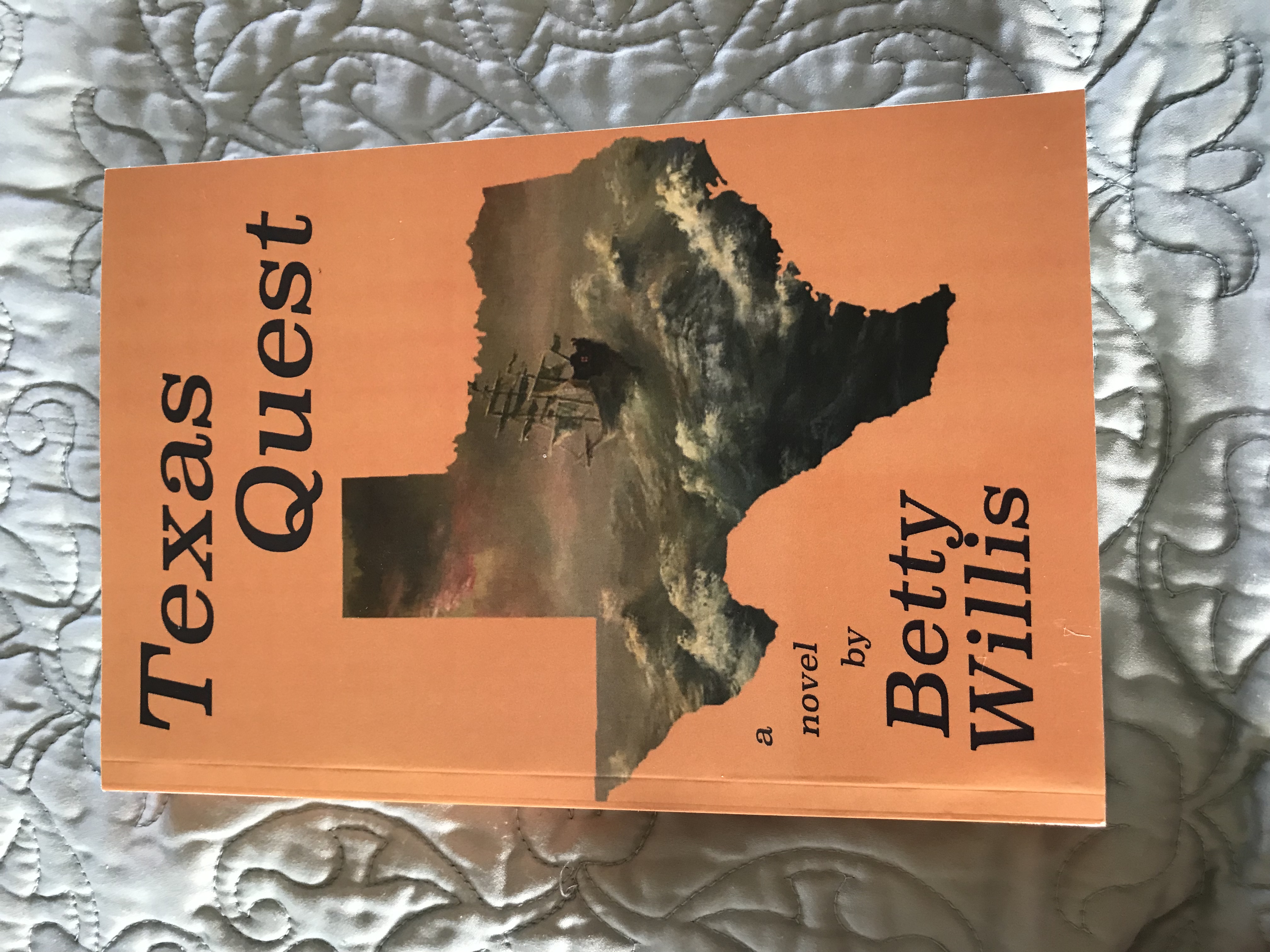
I wrote it to document the story of immigrants coming from Germany to Texas in 1872 to seek a better life. It documents three specific Germans and their love stories. Shows trials they endured while settling in Texas. This was a time just after slaves had been freed. There were about 68,000 in this area. They knew they were free but we’re confused about what to do next.

Site Menu