Search
BlogRead the Latest News
Texas Authors Institute of History
A Unique Museum that saves history, inspires the future, depth and gives to the present..

- Details
- Written by Super User
In high school writing came easy to me, it was the only way I could express myself naturally. My high school English teacher, Ms. Williams, encouraged me to write, and I always passed the course requirements without any difficulty. I usually wrote poems or what I believed to be songs that I hoped could be set to music sometime in the future. I had a pile of things that I had written, but unfortunately, as time passed and life got busy, I lost all of my compositions.
An example of how important and healing writing can be for me is when I wrote a poem to my four-year-old daughter Laura after my first wife and I separated. I was in an all-night coffee shop and was feeling very depressed. As I wrote the poem to Laura I was crying. I have thought about this sad night many times throughout the years and I have always had the same sad memory; in an all-night café, crying, and writing a poem to Laura. However, about twenty years later, against all odds, I rediscovered that poem. Again, it brought up the same emotions. Again, I cried the same way I had the night I had written it twenty years earlier. From that experience learned that when one is writing from the heart, one's emotions, or spirit, can transcend time.
Why science fiction as a choice to write a story? I chose to write science fiction because I thought it would be and easy way to express myself and I have always liked the genre. I wanted my science fiction to be "more down to earth", or plausible, than some that has been written by others. I perused the NASA.GOV, files for hours looking for interesting things on the many moons in the solar system. I found a few and incorporated those ideas in my books as food for thought.
- Details
- Written by Super User
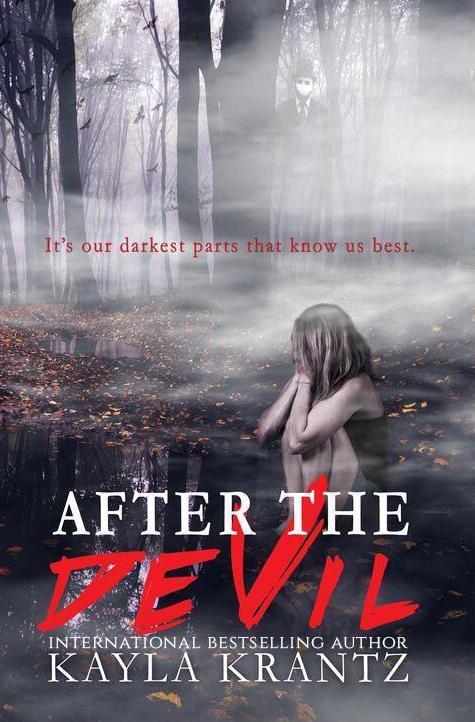
Writing has always been a dream of Alex Alpine’s. After a run with self-publishing leaves her short of her dream of becoming a bestselling author, she decides to quit. Jamie Knox, a recovered addict, can’t bring himself to accept her decision.After a fight with her husband, Alex finds herself face to face with a seemingly charming man from out of town. The next thing she knows, she’s tied up in his basement. Kidnapped and trapped in Jamie’s house in the middle of the woods, Alex yearns for her freedom. The dead body keeping her company makes the need stronger.As her captivity extends from weeks to months, Jamie becomes more to Alex than just the man who ripped her from her family. He becomes her friend and confidant. Torn between her duties to the daughter she left behind, and the life that Jamie’s made for her, Alex must figure out where her true priorities lie. To do so, she must dive into not only her own past traumas but Jamie’s as well.
- Details
- Written by Super User
Citation
The following, adapted from the Chicago Manual of Style, 15th edition, is the preferred citation for this article.
William E. Bard, "ADAMS, WALTER R.," Handbook of Texas Online (http://www.tshaonline.org/handbook/online/articles/fad08), accessed March 19, 2015. Uploaded on June 9, 2010. Published by the Texas State Historical Association.