Search
BlogRead the Latest News
Texas Authors Institute of History
A Unique Museum that saves history, inspires the future, depth and gives to the present..

- Details
- Written by Super User
LEA, THOMAS CALLOWAY III (1907–2001). Tom Lea was an artist and writer who excelled as a muralist, illustrator, portraitist, landscapist, World War II artist correspondent, poet, novelist and historian. Born in El Paso, Texas, on July 11, 1907, he was the eldest of three boys of Zola (Utt) Lea and Thomas Calloway Lea, Jr. His mother made sure that he attended the Baptist church and knew the Bible. His father was a populist lawyer who became El Paso’s mayor from 1915 to 1917 during the Mexican Revolution. The bedtime stories Mayor Lea told his sons about Daniel Boone and Davy Crockett were matched by real-life adventures of watching battles on the other side of the Rio Grande in Ciudad Juárez through a telescope and being escorted to elementary school by a policeman after Pancho Villa threatened the Lea family.
Mount Franklin, which stood outside Tom Lea’s boyhood home, remained a familiar presence his entire life. His childhood was happy with parents who supported his desire to be an artist—his father quipped that he’d rather his son be a “good blacksmith” than a “poor preacher.” El Paso’s librarian introduced Lea to art books, his high school art teacher suggested he design the El Paso High School annual, and his English teachers provided the foundation for his becoming a writer. During high school summers Tom Lea traveled to Santa Fe to stay with a federal judge and friend of his father’s. He visited his first museum there and became familiar with Indian cultures. He also met landscape painter Fremont Ellis, the first artist to take his work seriously.
In 1924 Tom Lea graduated from El Paso High School and left for the Art Institute of Chicago where he studied under muralist John Warner Norton and became a paid apprentice on murals in Chicago and other cities. He married fellow art student Nancy Jane Taylor, an aspiring writer, in 1927. Tom and Nancy Lea befriended a couple living in Kenilworth, Illinois, who opened their library and introduced them to books by Ernest Hemingway, Gertrude Stein, F. Scott Fitzgerald, and Aldous Huxley. Lea also worked as a freelance commercial artist doing advertisements and appearing in the Saturday Evening Post. In 1930 he had earned enough money to take Nancy to Europe, where they explored Italian Renaissance murals and other great artistic achievements.
In 1933 Tom and Nancy Lea moved to Santa Fe, New Mexico, where he worked for the Laboratory of Anthropology and painted for the Works Progress Administration (WPA, see WORK PROJECTS ADMINISTRATION). He completed paintings for the Museum of Fine Arts in Santa Fe and murals for the library at New Mexico College of Agriculture and Mechanic Arts (now New Mexico State University). Soon after moving into their one-room adobe home on Fremont Ellis’s Rancho San Sebastian, Nancy suffered an appendicitis attack. After a botched operation in the Santa Fe hospital, infection set in from which Nancy never recovered. She died in El Paso on April 1, 1936. After driving to Santa Fe to recover a few things, Tom Lea left and never returned again.
Work kept Lea going in 1936 when his mother and grandmother’s deaths left him bereft of the most important women in his life. During that time mural painters benefitted from federal government projects through the Treasury Department, Section of Fine Arts. He won the competition for the Ben Franklin Post Office on Pennsylvania Avenue in Washington, D.C., in 1936 with his mural The Nesters, which brought him national attention and led to his selection for the Texas Centennial murals in the Hall of State at Fair Park in Dallas. Of the sixteen murals Tom Lea painted, seven were done for the federal government with the majority painted between 1934 and 1941.
While working on the Pass of the North mural in the El Paso federal courthouse in 1938, he met Sarah Catherine Dighton Beane, a divorcée from Monticello, Illinois, who had come to El Paso to visit a friend. He proposed on the first date, and they were married in July. The union lasted sixty-three years. Sarah’s son, James, from her previous marriage, was adopted by Lea. Tom Lea later said that his portrait of Sarah in the Summertime, which he painted after his return from World War II in 1947, was his favorite painting and the best work he ever did.
Carl Hertzog and J. Frank Dobie were two friends of great import to Tom Lea’s work. Hertzog, a printer and book designer, and Dobie, a writer, sharpened Lea’s attention to the writing and making of books. He illustrated Dobie’s Apache Gold and Yaqui Silver (1939), John C. Duval: First Texas Man of Letters (1939), and The Longhorns (1941), giving him national visibility and bringing him to the attention to the managing editor of Life magazine who read Dobie’s books.
After being awarded a fellowship from the Rosenwald Foundation in 1940 to paint a series of paintings about authentic Southwest figures in authentic Southwest landscapes, Tom Lea received a telegraphed invitation from Life magazine to board a United States Navy destroyer in the North Atlantic as an accredited war artist correspondent. He resigned his fellowship and for four years traveled more than 100,000 miles and documented U.S. and Allied soldiers, sailors, and airmen worldwide. In the North Atlantic he covered the fight against German U-boats in late 1941; he was aboard the carrier USS Hornet during the air and sea battles off Guadalcanal in 1942 and witnessed the sinking of the USS Wasp; he traveled halfway around the world with the United States Army Air Forces transport, fighter, and bomber crews in England, North Africa, and China in 1943; and he landed on Peleliu with the Seventh Marine Regiment of the First Marine Division in 1944. His paintings and writing were featured in ten issues of Life magazine between 1941 and 1945. During the war he also painted a number of notable portraits, including Claire Chennault, Jimmy Doolittle, and Chinese Nationalist leader Chiang Kai-shek and his wife.
Upon returning from war, Tom Lea turned to writing and realized “there are many parts of mankind’s living and dying better expressed with words than with paint.” He wrote The Brave Bulls (1949) about bullfighting in Mexico, a bestseller published in ten foreign editions and turned into a motion picture starring Mel Ferrer. Lea’s The Wonderful Country (1952) about pistol-toting in Chihuahua became a bestseller published in three foreign editions and was made into a film starring Robert Mitchum. His two-volume history The King Ranch (1957) was considered by some scholars to be the greatest ranching history ever written. Lea wrote The Primal Yoke (1960) about mountaineering in Wyoming; The Hands of Cantú (1964) about horse training in sixteenth-century Nueva Viscaya; A Picture Gallery (1968), an autobiographical work about the experiences documented in his paintings; and In the Crucible of the Sun (1974) about King Ranch properties in Australia. He illustrated all of his books in pen and ink, Chinese ink wash, watercolor, or oil on canvas. The majority of his books were published by Little Brown and Company of Boston. The Brave Bulls won the Carr P. Collins Award from the Texas Institute of Letters and The Hands of Cantú won the Texas Institute’s Jesse Jones Award.
During the last decades of his life, Lea’s interest in writing books diminished, and he felt a renewed interest in painting. He and Sarah traveled far and wide, and he painted places as remote as China, Equador, Somoa, and Australia—though most of his subjects were from the vicinities of home. Lea painted portraits, but never for hire; he reserved them for his own pleasure and for friends who could pose in his studio. Only twice did he make exceptions—he once painted a portrait of Sam Rayburn for the Rayburn Building in Washington, D.C. (1966), and he painted Benito Juarez, now in the collection of the U. S. State Department in Washington, D.C. (1948).
Describing himself as an “avowed painter of the Almighty’s own outward and visible handiwork,” Tom Lea’s favorite subjects were the Southwestern landscape he knew so well with authentic Southwestern figures. He wrote that each of his subjects had “its own worthiness, each awaiting summons—upon right occasion—for portrait likeness.” He received numerous honors during his life, including the first Lon Tinkle Award for Lifetime Achievement from the Texas Institute of Letters in 1981. In 1995 the Marine Corps Heritage Foundation presented Lea the Colonel John W. Thomason, Jr. Award for his depictions of Marines during World War II. The El Paso Museum of Art established its Tom Lea Gallery in 1996, and in 1997 he was honored as a Fellow in the Texas State Historical Association.
In accepting the Republican nomination for president in 2000, George W. Bush quoted Tom Lea’s optimistic words about living on the sunrise side of Mount Franklin (quoted from his book A Picture Gallery). “Sarah and I live on the east side of our mountain. It is the sunrise side, not the sunset side. It is the side to see the day that is coming, not the side to see the day that is gone. The best day is the day coming, with the work to do, with the eyes wide open, with the heart grateful.” For eight years, Tom Lea’s painting Rio Grande, on loan from the El Paso Museum of Art, was displayed in the Oval Office of the White House.
On January 29, 2001, Tom Lea died at Sierra Medical Center in El Paso from injuries suffered from a fall. His family was by his side, and the familiar site of Mount Franklin was visible outside his hospital window. Hundreds of people attended his memorial service at First Baptist Church, including First Lady Laura Bush. On May 14, 2005, a commemorative cenotaph was erected for Lea and his wife in the Texas State Cemetery. After Sarah Lea died in 2008, their ashes were scattered over Mount Franklin. His extensive collections of art, papers, and photography are housed in the Harry Ransom Center on the campus of the University of Texas at Austin as well as the Special Collections of the University of Texas at El Paso. His paintings done for Life magazine during World War II are held by the U. S. Army Center of Military History, Fort Belvoir, Virginia. The Tom Lea Institute in El Paso was established to preserve the artist’s legacy. Pulitzer-winning biographer Robert Caro called him “an unsung genius of the twentieth century who made it purely on the quality of his work.” Texas collector and historian J. P. Bryan wrote, “Tom Lea was the greatest artist, illustrator and writer Texas has ever known.”
Austin American-Statesman, October 27, 1989. J. P. Bryan, “Tom Lea and Texas,” speech published on the occasion of Tom Lea in Dallas, May 6–8, 2010, Tom Lea Institute, El Paso. Rebecca Craver and Adair Margo, Tom Lea: An Oral History (El Paso: Texas Western Press, 1995). Dallas Morning News, February 3, 4, 2001. El Paso Times, February 3, 2001. Brendan M. Greeley, ed., The Two Thousand Yard Stare: Tom Lea’s World War II (College Station: Texas A&M University Press, 2008). Houston Chronicle, July 5, 1998. Tom Lea, A Picture Gallery (Boston: Little Brown and Company, 1968). Tom Lea, The Southwest: It’s Where I Live (Dallas: DeGolyer Library, Southern Methodist University, 1992). Al Lowman, “Remembering Tom Lea, Honorary Life Member,” Southwestern Historical Quarterly 105 (July 2001).
Citation
The following, adapted from the Chicago Manual of Style, 15th edition, is the preferred citation for this article.
William E. Bard, "ADAMS, WALTER R.," Handbook of Texas Online (http://www.tshaonline.org/handbook/online/articles/fad08), accessed March 19, 2015. Uploaded on June 9, 2010. Published by the Texas State Historical Association.
Books by the Author:
- Details
- Written by Super User
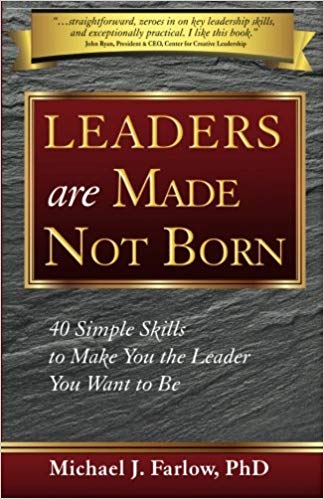
Author Michael J Farlow
Leaders are Made Not Born
Synopsis
Endorsed by the President of the Center for Creative Leadership, Leaders are Made Not Born is a realistic and thought-provoking look at the leadership skills you need to bring out the very best in yourself and others. This book closes the gap between theory and practice by revealing 40 simple skills that can help you be the leader you want to be. We are all capable of becoming great leaders. What it takes are the desire, commitment, and determination to lead, as well as the expert advice and education this book provides. Then, it is up to you to practice the forty skills until they are perfected. Now, more than ever before, the world needs great leaders. You can be one.
- Details
- Written by Super User
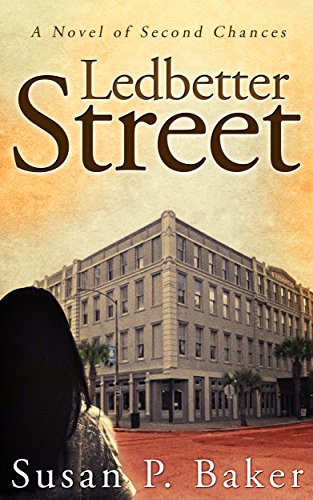
Author Susan P Baker
Ledbetter Street
- Details
- Written by Super User
LEE, ARTHUR TRACY (1814–1879). Arthur Tracy Lee, painter and United States Army officer, was born in Northumberland, Pennsylvania, in 1814 and studied art in Philadelphia as a youth, reportedly under Thomas Sully. On October 8, 1838, through the influence of Simon Cameron, later secretary of war in the Lincoln administration, Lee was commissioned a second lieutenant in the Fifth United States Infantry. On November 1 of the same year he transferred to the Eighth United States Infantryqv. He was stationed for a time on the Saint Lawrence River but in 1840 assisted in the removal of the Winnebago Indians from Wisconsin. He was promoted to first lieutenant on March 4, 1845, and to captain on January 27, 1848. After service against the Seminole Indians in Florida, Lee's regiment was placed under the command of Gen. Zachary Taylorand transferred to Texas in September 1845 with the "Army of Occupation." At the outbreak of the Mexican War, Lee was given command of a company of the Eighth Infantry that he commanded at the battles of Palo Alto and Resaca de la Palma.qqv After receiving a brevet promotion to captain, he was detached on recruiting duty at Rochester, New York, from September 1846 through July 1848. During the late summer and fall of 1848 he once more was involved with Winnebago removal, this time from Minnesota. Late in 1848 he returned to his regiment in Texas as commander of Company C. He remained in the state for twelve years, at Fort Croghan, the building of which he supervised, and then at Fort Martin Scott, Fort Graham, Fort Mason, Fort Chadbourne, Ringgold Barracks, and Fort Davis. Twice during this period he was placed under arrest, presumably due to misunderstandings with his superior officers. In October 1854 he helped to establish Fort Davis in a location in Jeff Davis county that he described as "beautiful beyond description." After serving as temporary commander there, Lee was sent with two companies of the Eighth, in September 1858, to establish Fort Quitman, some 120 miles to the west. After that duty he served briefly in the so-called "Cortina War" (see CORTINA, JUAN N.) at Fort Brown.
In addition to his capabilities as a soldier, Lee was a talented painter in oils, a poet, a musician, an essayist, a historian, a landscape architect, an engineer, and an administrator. He is best remembered for his watercolors. Of his 154 extant paintings, all but two are in this medium, and at least thirty are of Texas scenes. These include views of the Rio Grande, Brazos, and Guadalupe rivers; San Antonio, Rio Grande City, and Brownsville; and forts Croghan and Davis and their environs.
Lee's company was stationed at Fort Stockton when news of Texas secession came. Marching for the coast by way of Fort Clark and San Antonio, Lee and his company were intercepted in San Antonio on April 21, 1861, and Lee, although himself a slaveowner, was placed under arrest and released on parole. He was appointed major of the Second Infantry on October 26, 1861, but could not do active duty without violating the parole that he had been given in San Antonio. Exchanged at last, he saw service with the Army of the Potomac during the Civil War and received a promotion to brevet lieutenant colonel "for gallant and meritorious conduct" at the battle of Gettysburg on July 2, 1863, where he was seriously wounded in the right ankle and hip. Lee retired from active duty on January 20, 1865, but on July 28, 1866, received a retroactive promotion to the rank of colonel. From 1867 through 1872 he served as deputy governor and then governor of the Soldiers' Home in Washington, D.C., a position of considerable social importance. In 1871 he published two literary works, Army Ballads and Other Poems and, in the History of the Eighth U. S. Infantry, "Reminiscences of the Regiment." After 1872 Lee and his wife, Margaret, retired to Rochester, New York, and spent their summers at Shelter Island on the eastern end of Long Island, where he continued to paint. Colonel Lee died in Rochester on December 29, 1879, and is buried there in the Ashley family plot in Mount Hope Cemetery.
Francis B. Heitman, Historical Register and Dictionary of the United States Army (2 vols., Washington: GPO, 1903; rpt., Urbana: University of Illinois Press, 1965). Arthur Tracy Lee, Fort Davis and the Texas Frontier (College Station: Texas A&M University Press, 1976).
Citation
The following, adapted from the Chicago Manual of Style, 15th edition, is the preferred citation for this article.
William E. Bard, "ADAMS, WALTER R.," Handbook of Texas Online (http://www.tshaonline.org/handbook/online/articles/fad08), accessed March 19, 2015. Uploaded on June 9, 2010. Published by the Texas State Historical Association.